06/14/2015
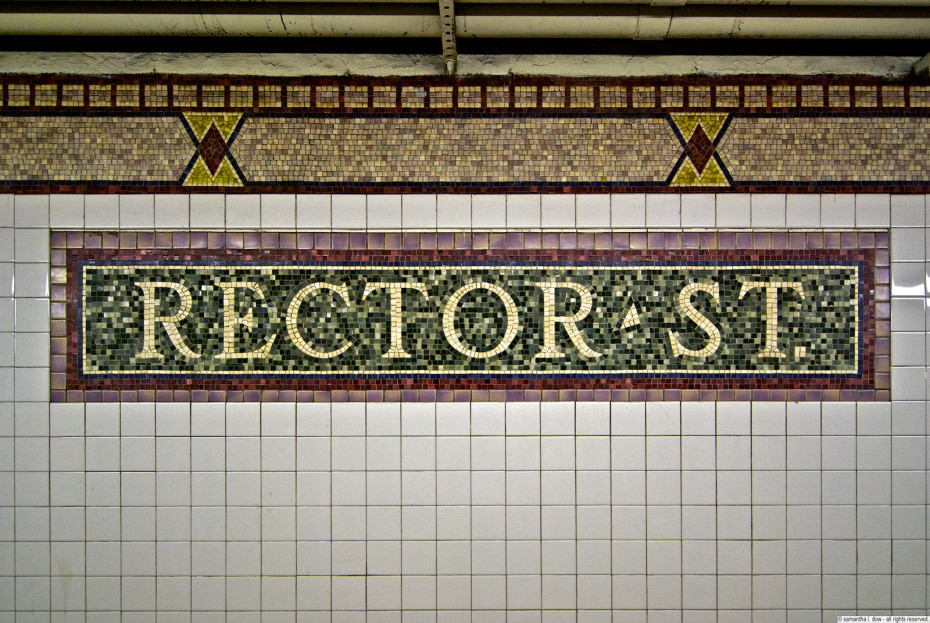
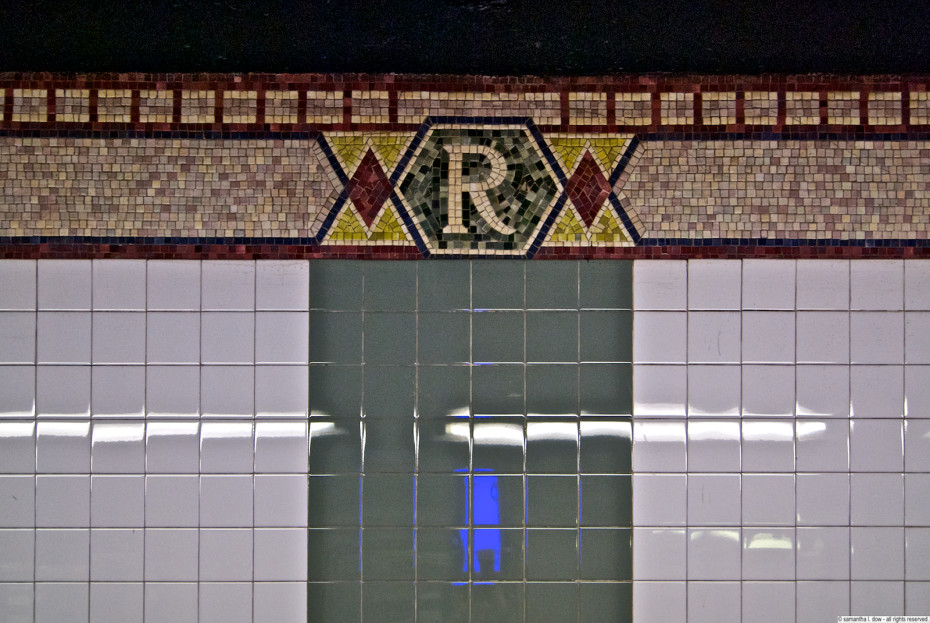
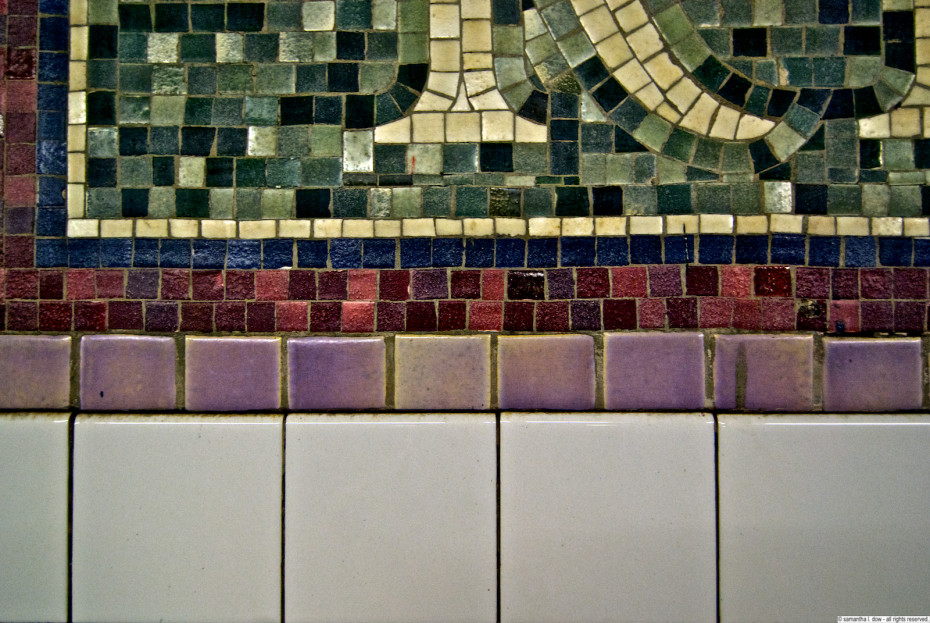
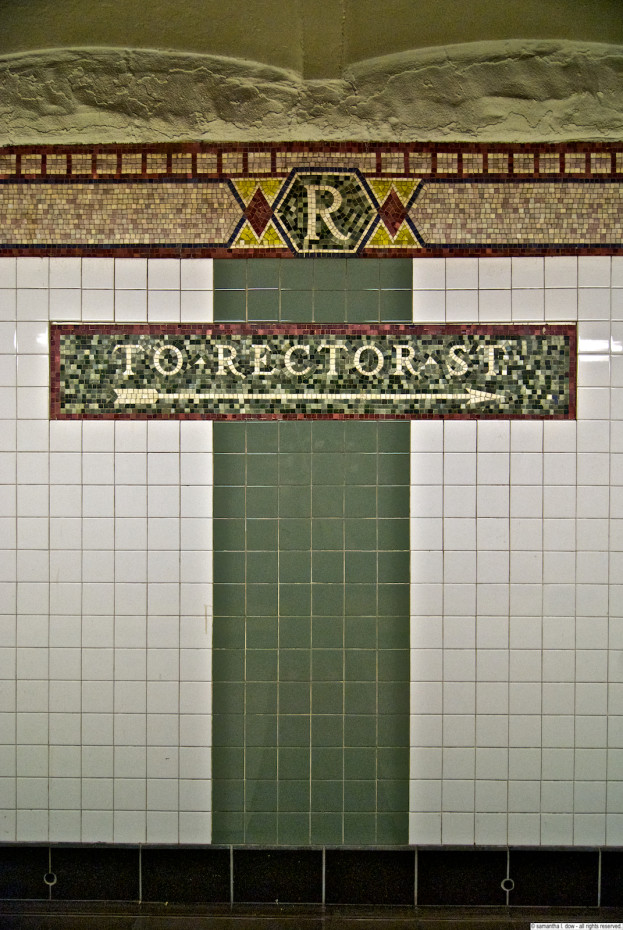
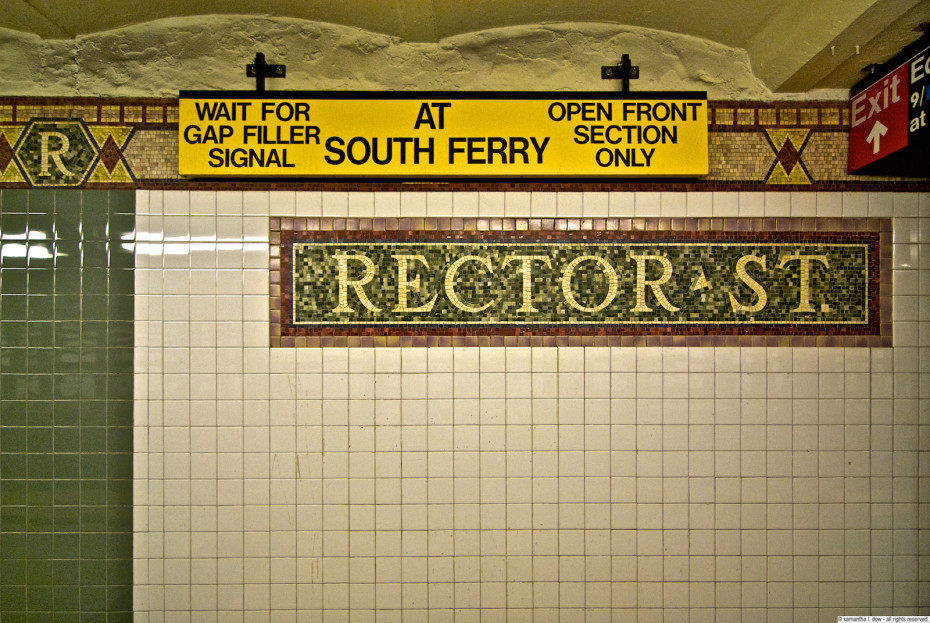
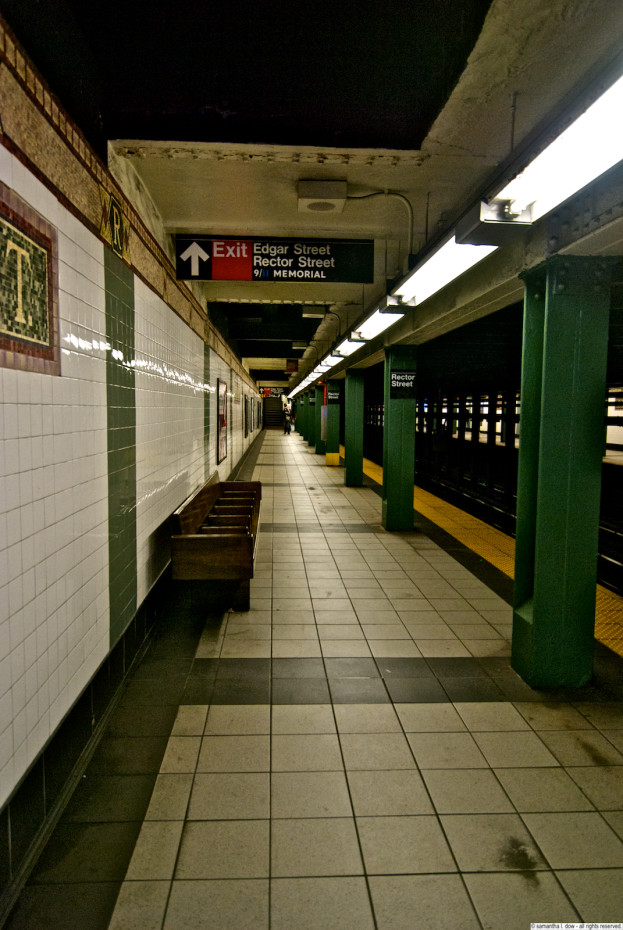
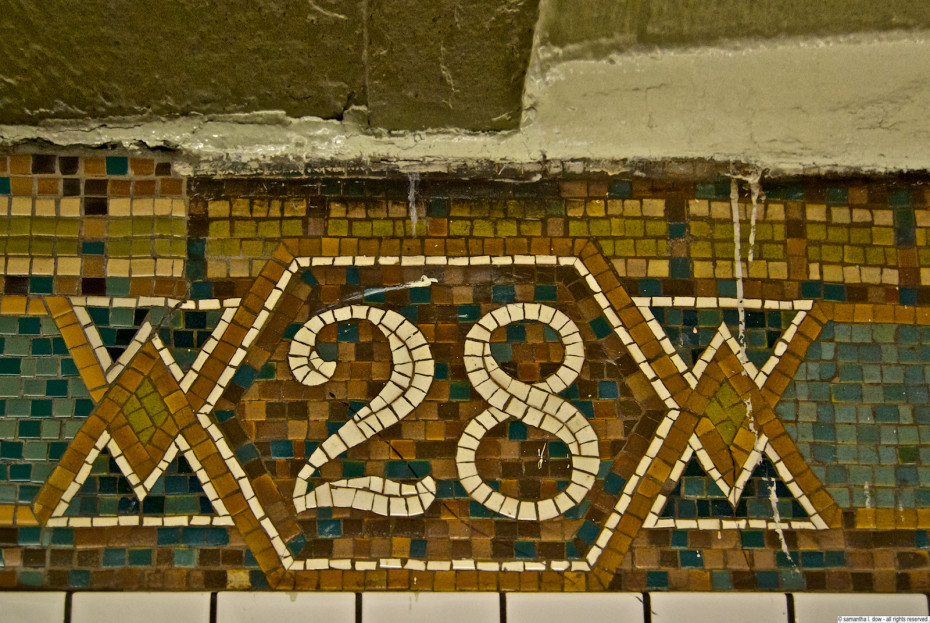
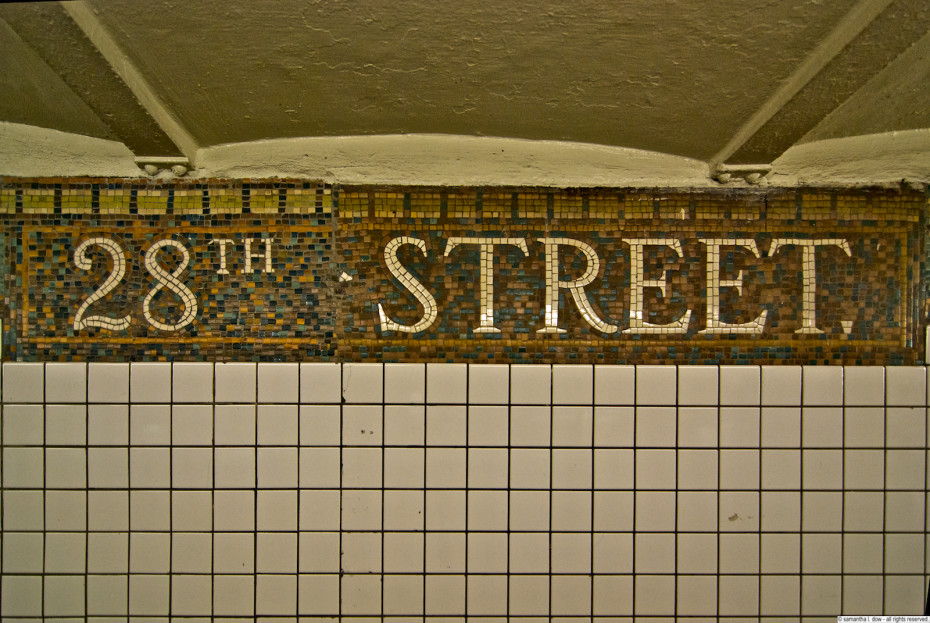
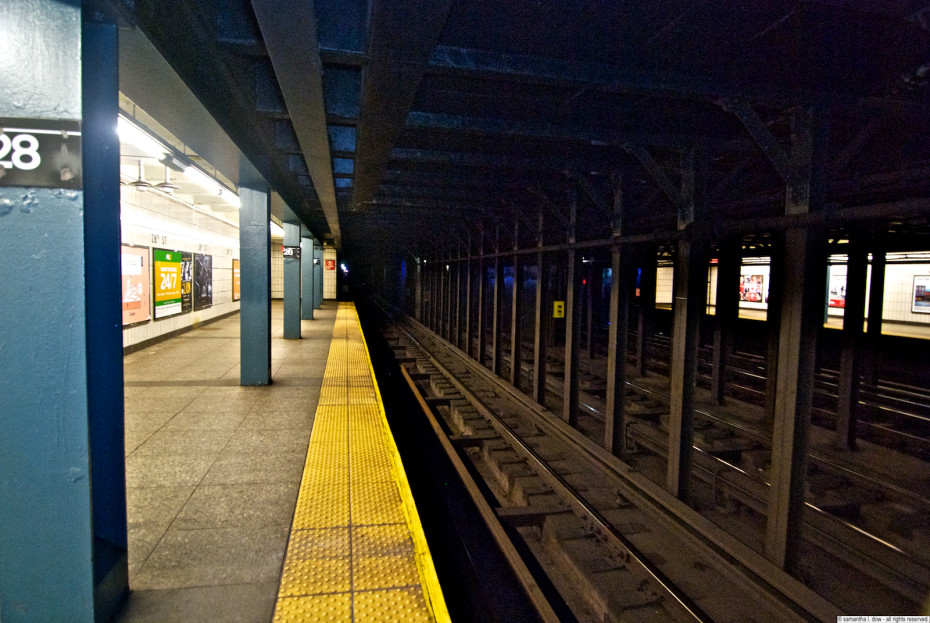
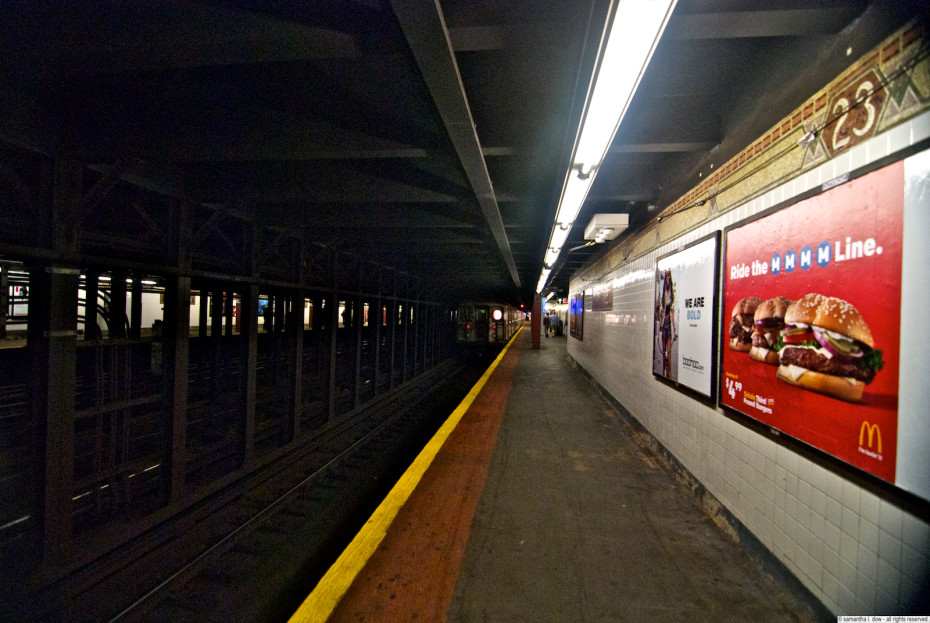
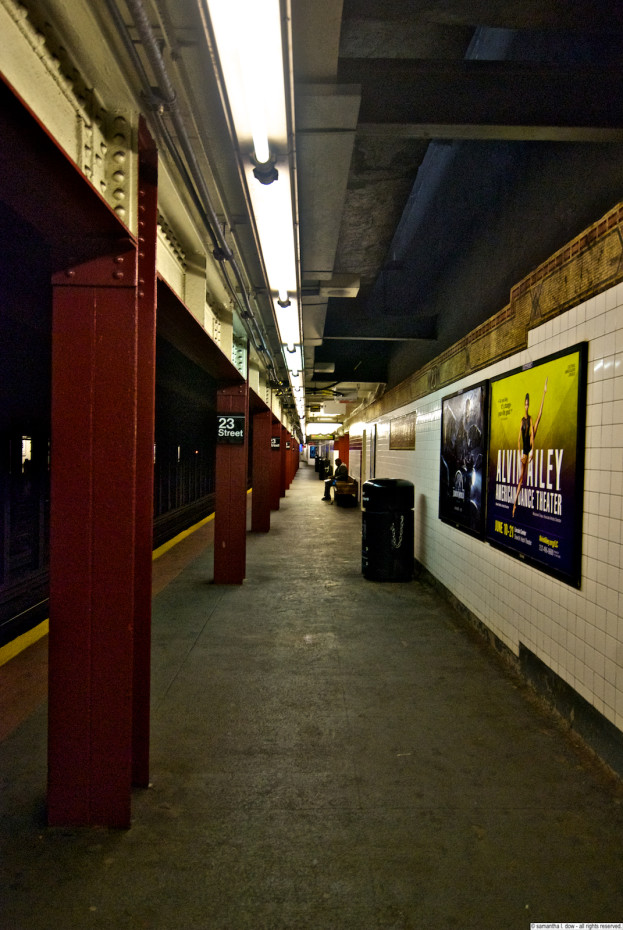
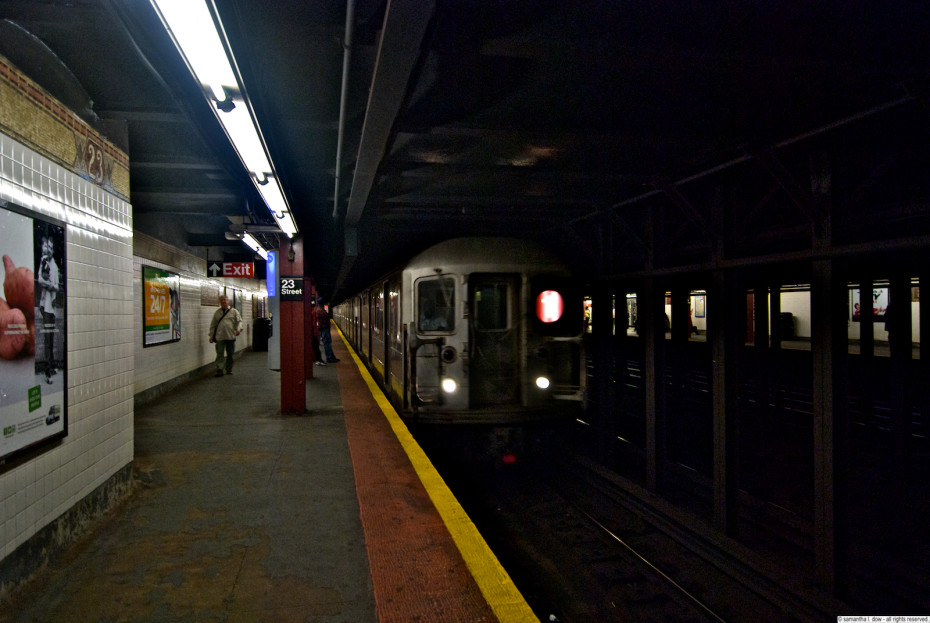
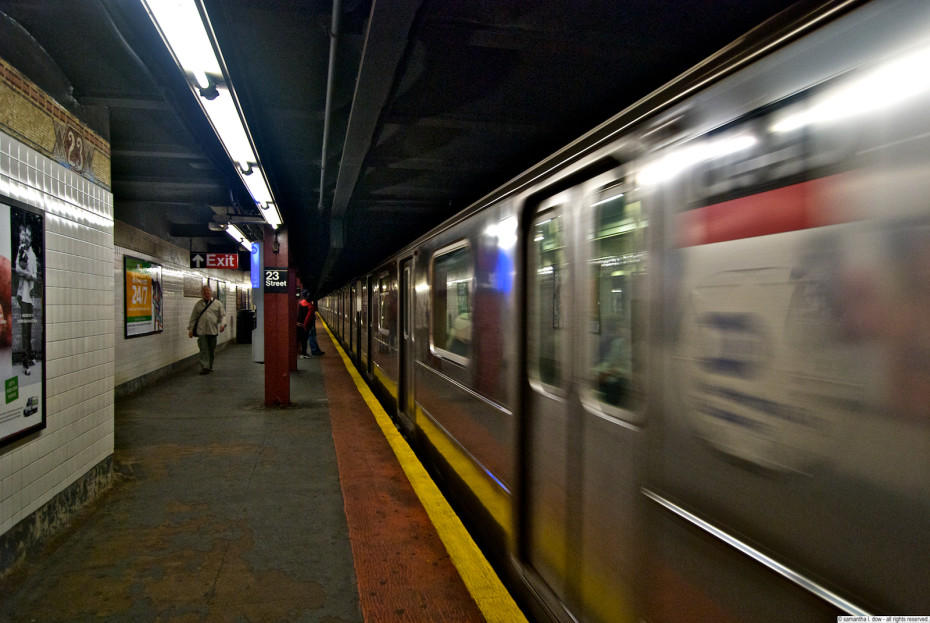
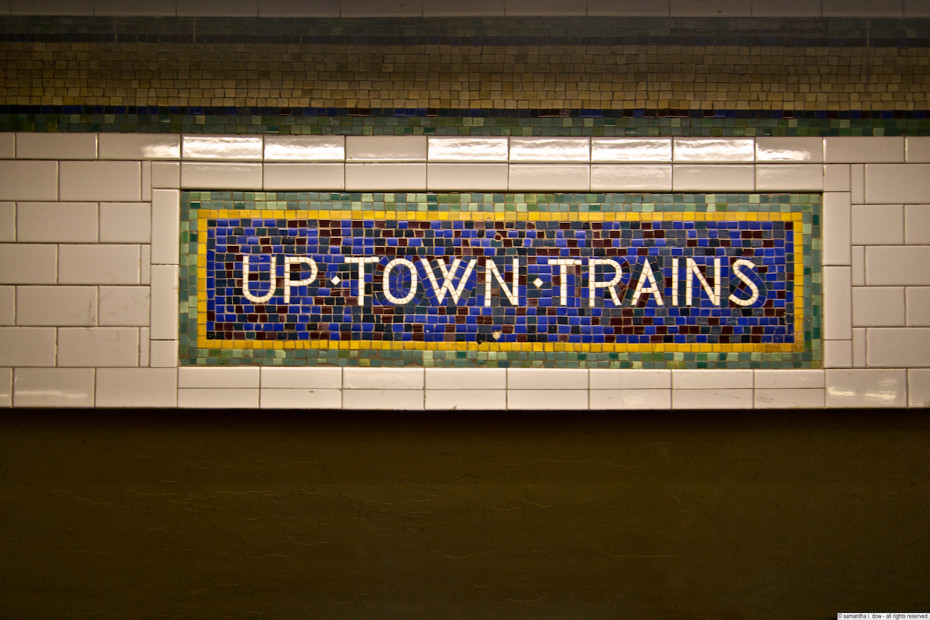
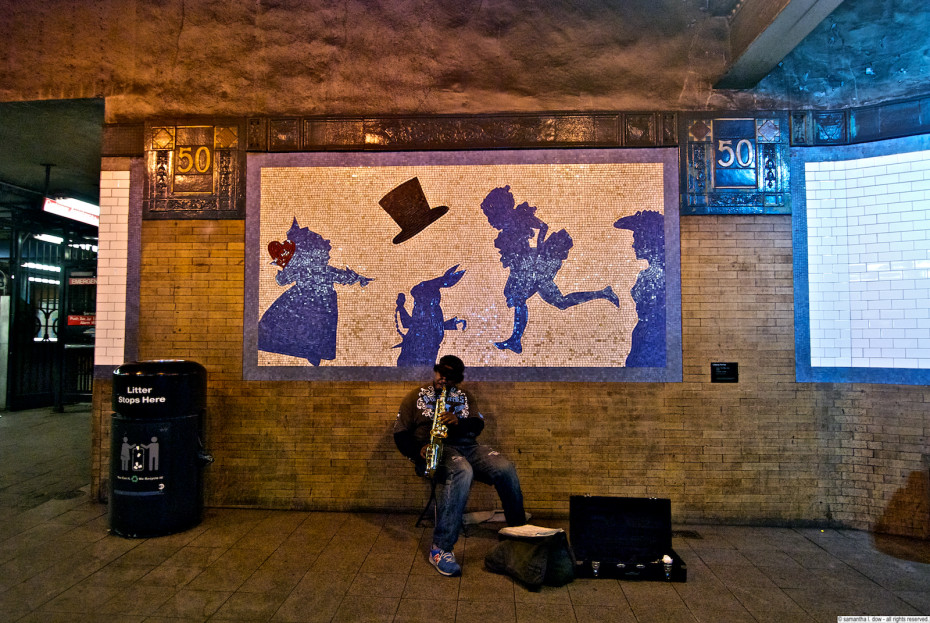
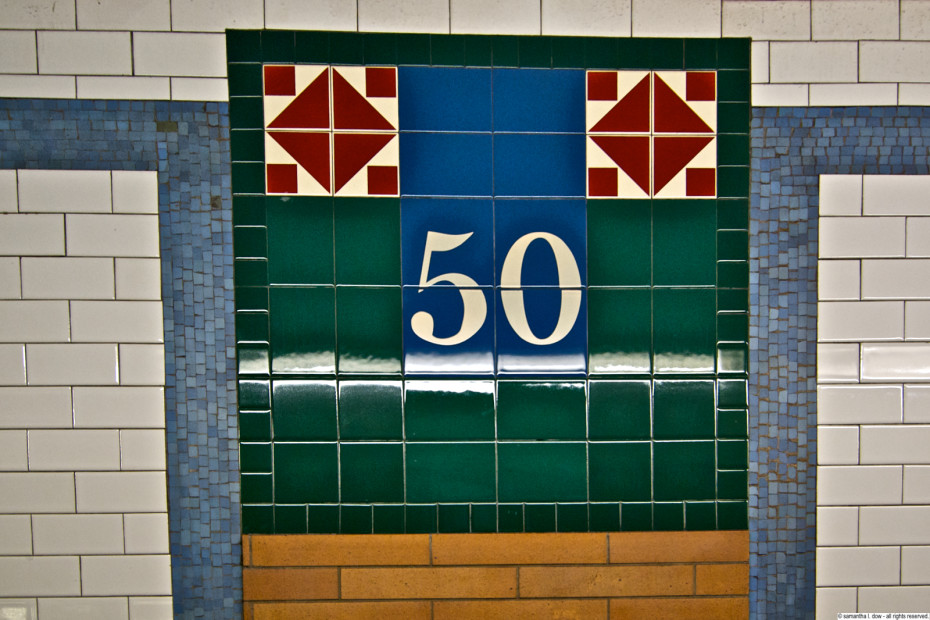
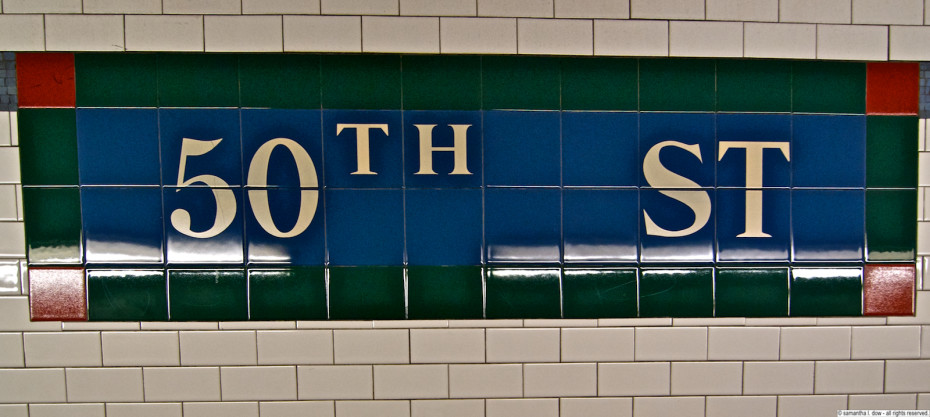
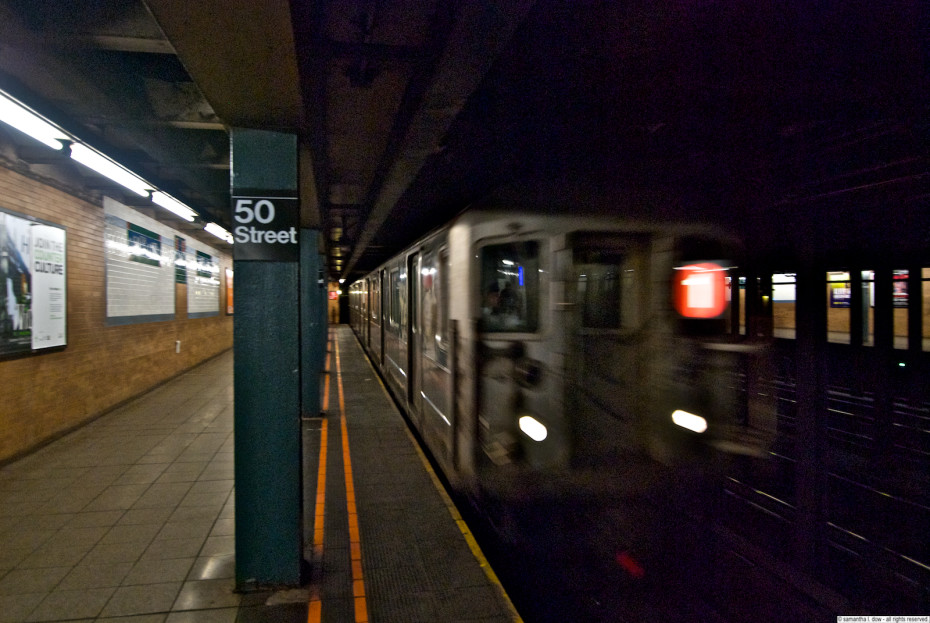
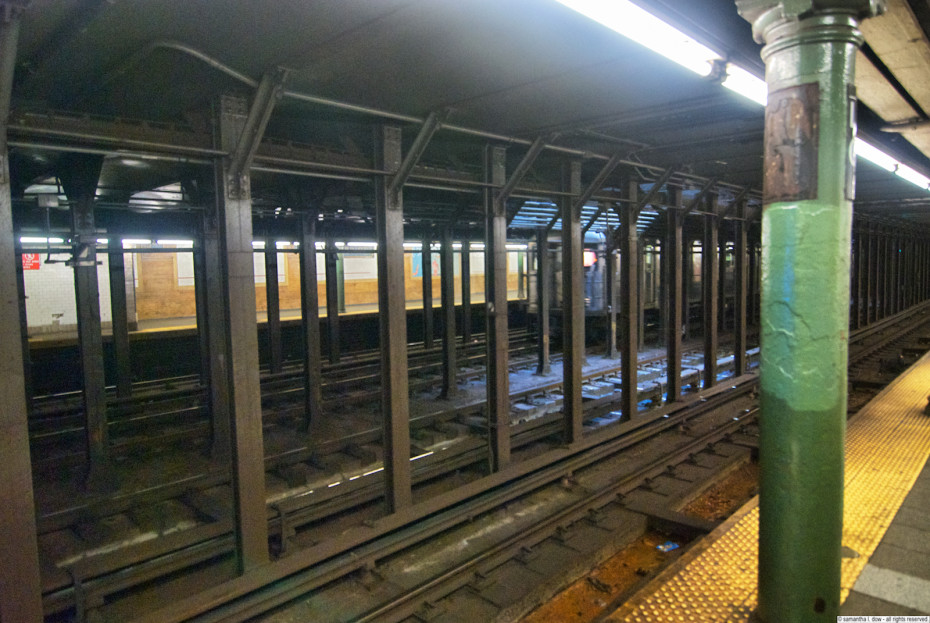
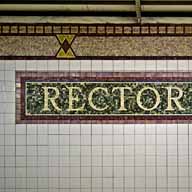
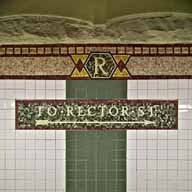
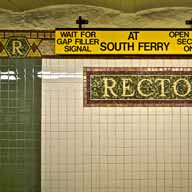
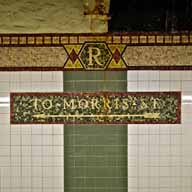
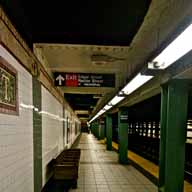
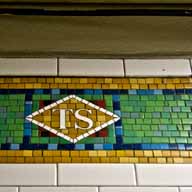
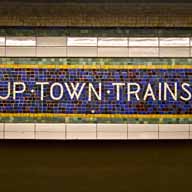
Here is yet more of the original IRT tile work, this time in pinkish hues. I particularly like that while the entire line was thematically consistent with the tiling, each station had its own color scheme. As with the other stations on the way downtown, the mosaics here are principally identificational and directional. We’re also now in the part of Manhattan without numbers. That being said, i can’t emphasize how nice it is when your train pulls into a station and there is clearly visible signage letting you know where you are. You’d be surprised at the number of stations on other lines where you have to pretty much guess.
This station was closed and renovated for approximately a year following the attacks of September 11, 2001, because the nearby tunnels collapsed and the line was shut during that period.
Station opened: July 1, 1918 (Renovated 2002)
Original system: IRT
Trains: 1
Source: Wikipedia
06/6/2015
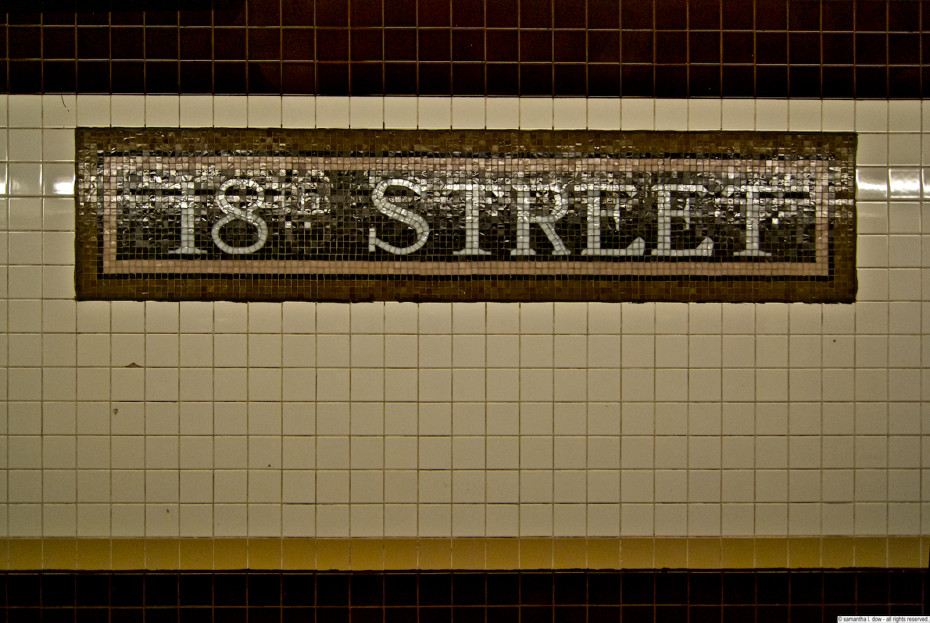
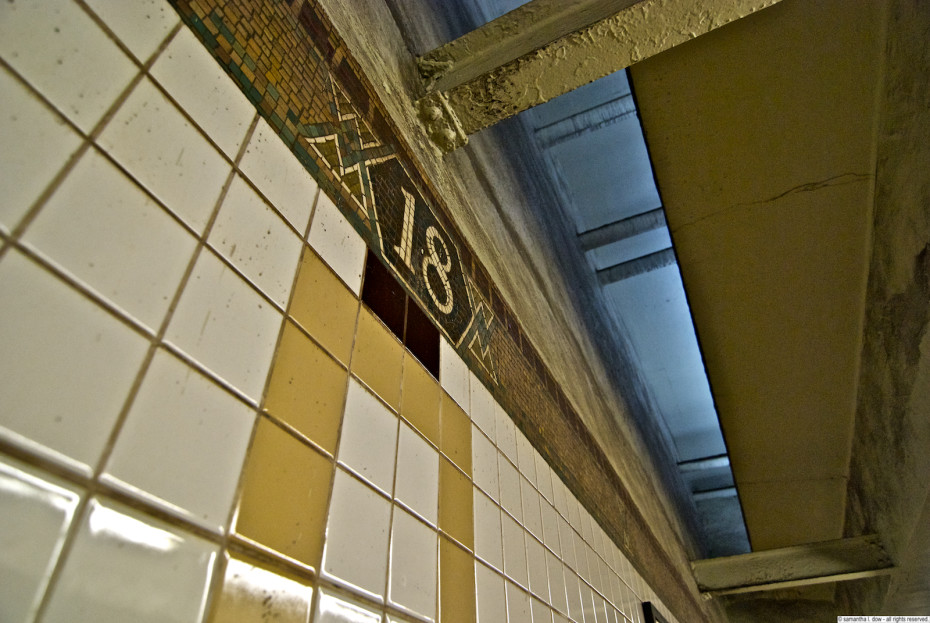
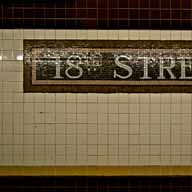
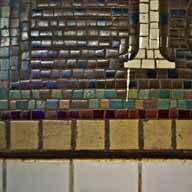
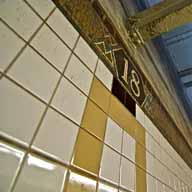
The 18th street 1 train station is a bit of an oddity. It’s somewhat unnecessary, being so close to the 23rd street station and the 14th street station, but it’s there, and it continues to be used. The mosaics are all the same, so while they are quite pretty, there’s no need to be repetitive here.
Station opened: July 1, 1918 (renovated 1991-1992)
Original system: IRT
Trains: 1
Source: Wikipedia

06/6/2015
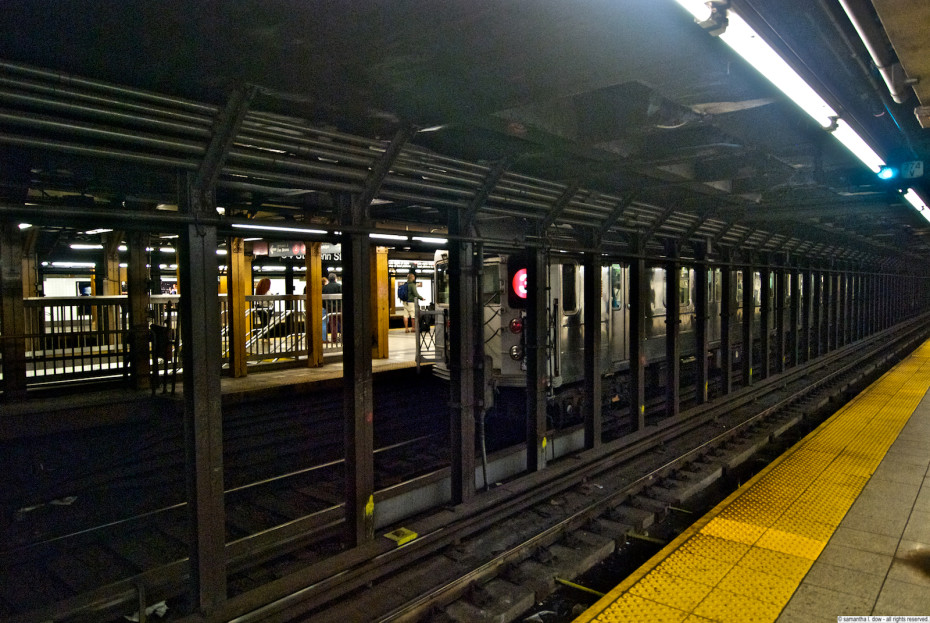
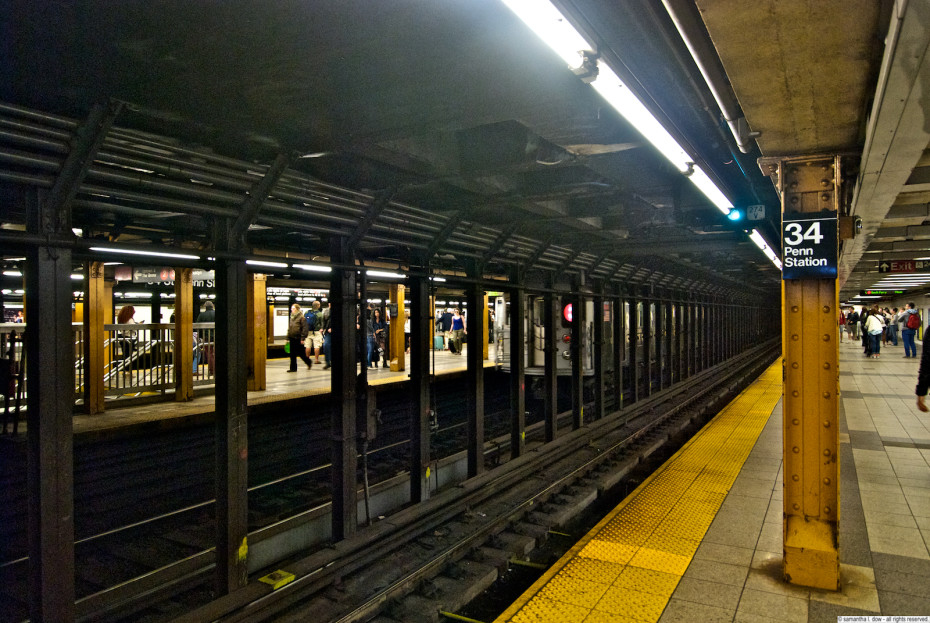
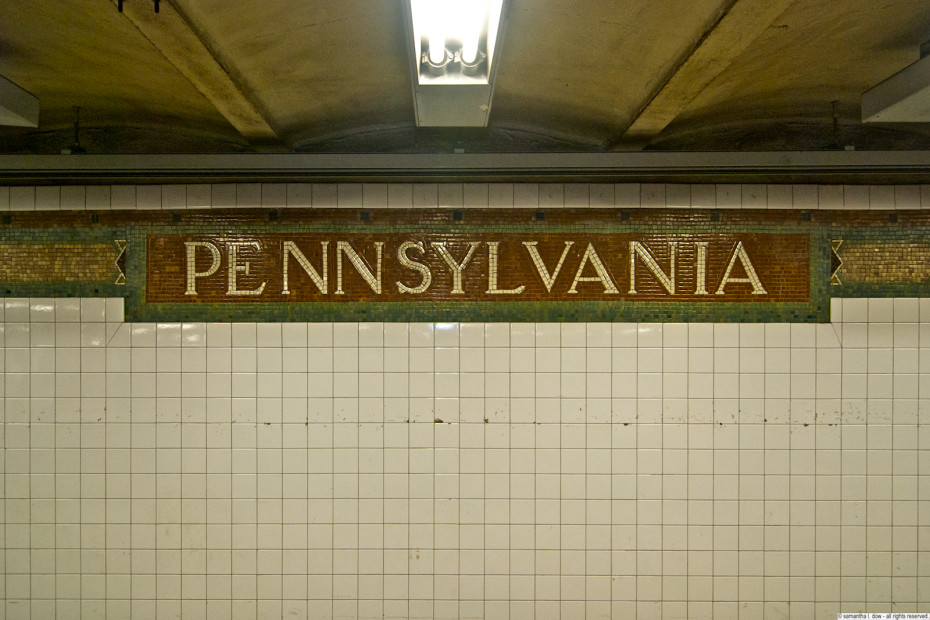
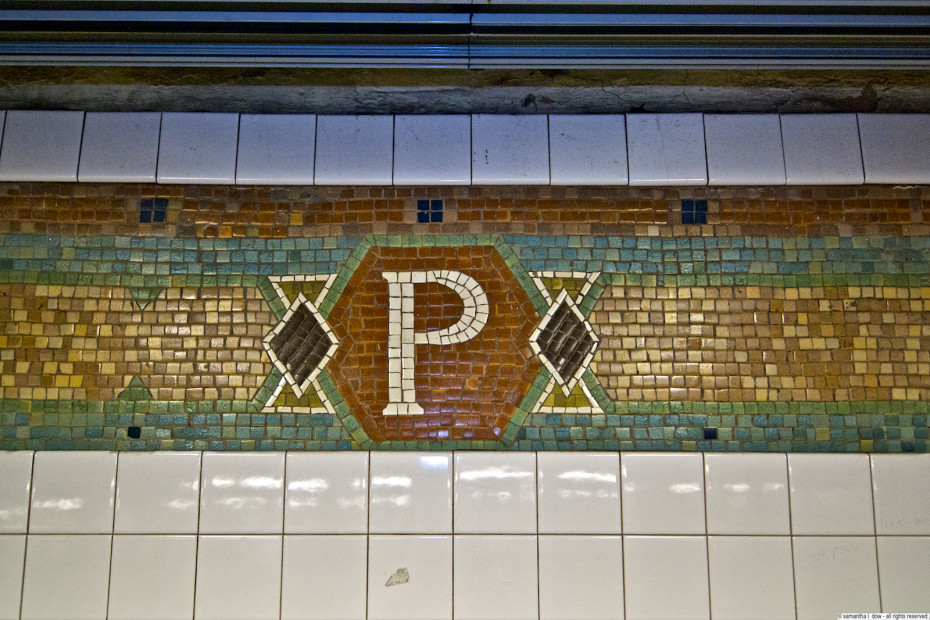
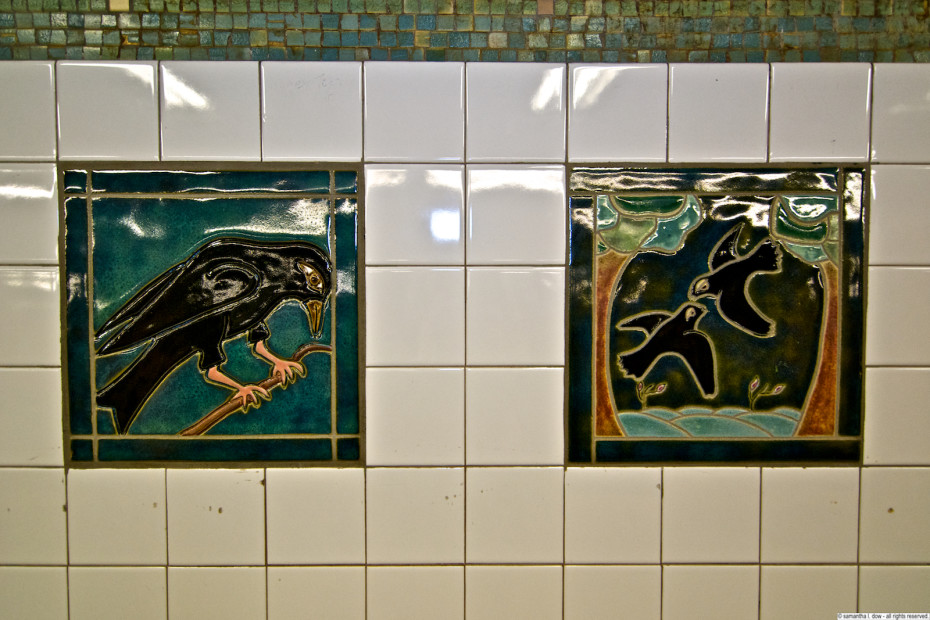
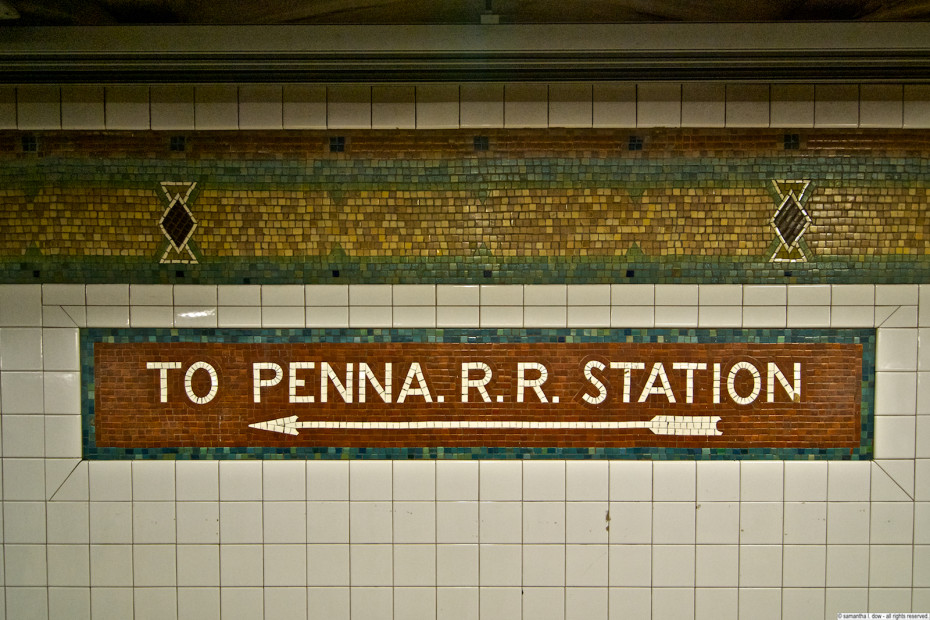
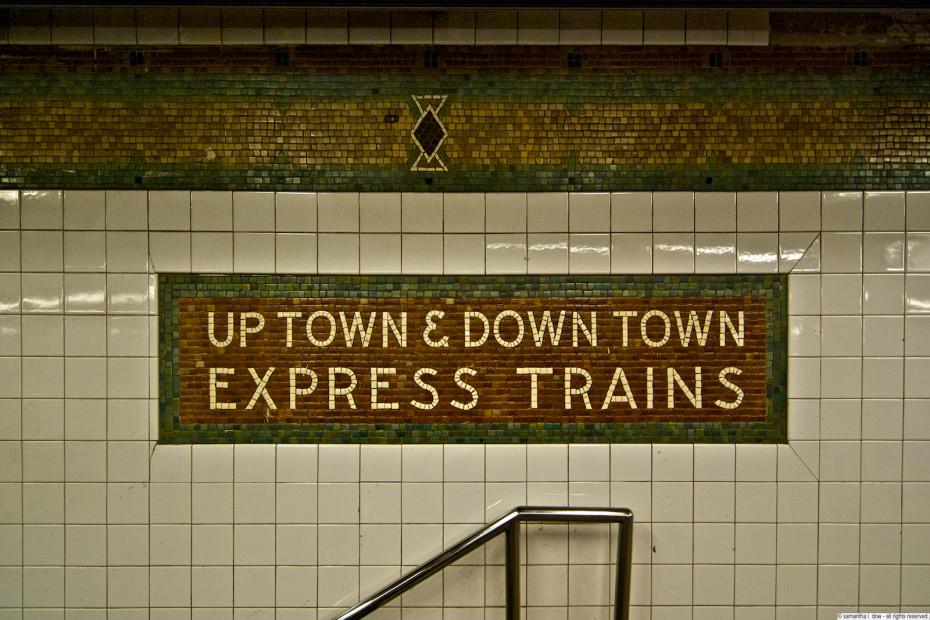
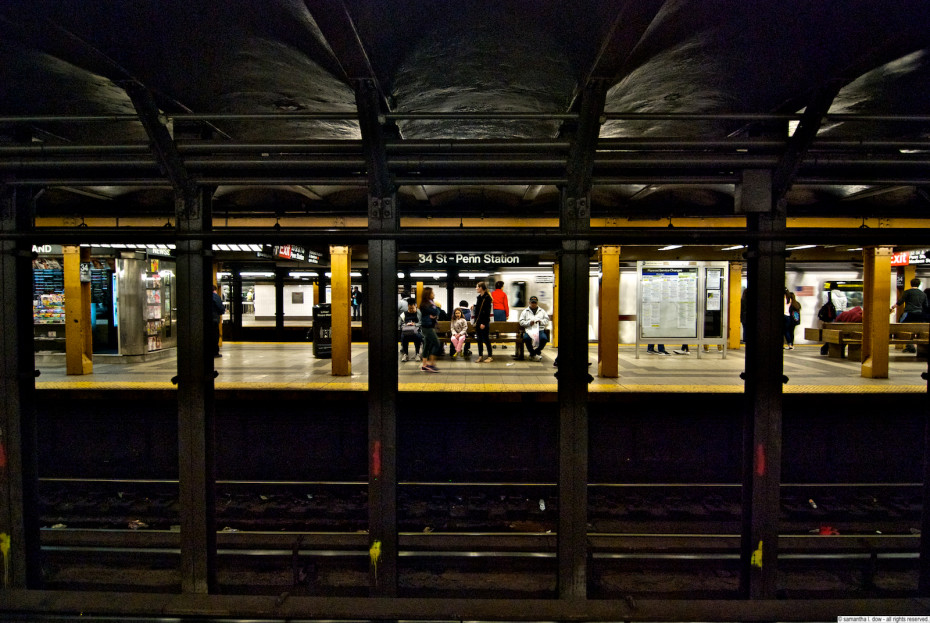
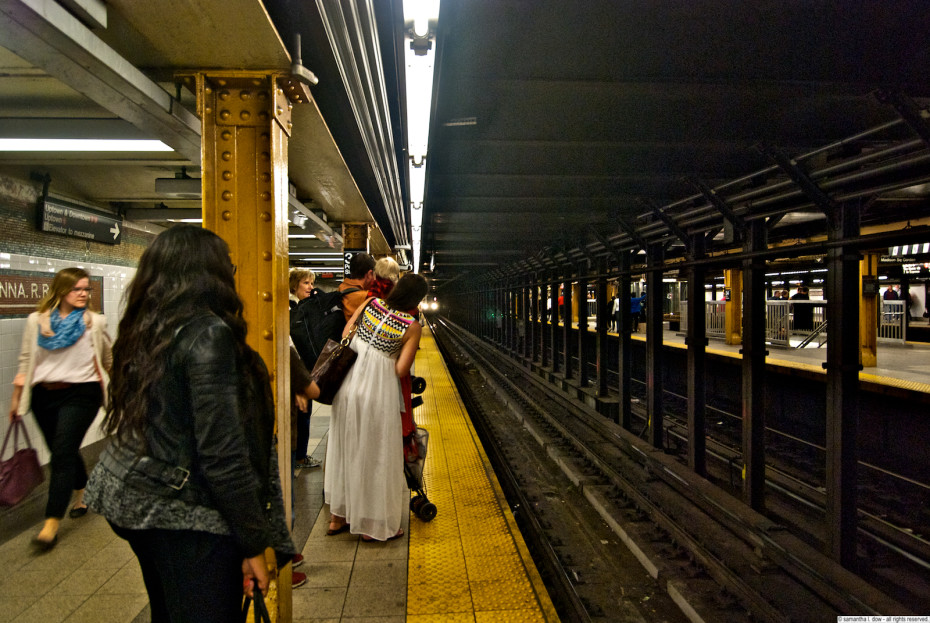
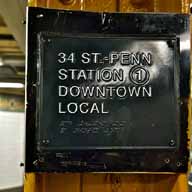
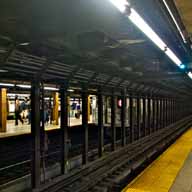
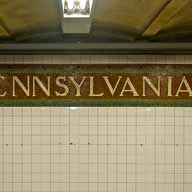
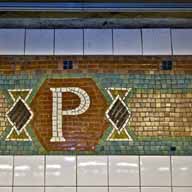
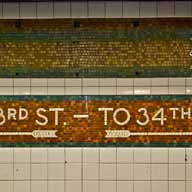
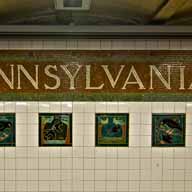
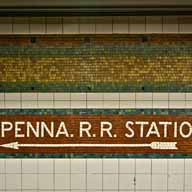
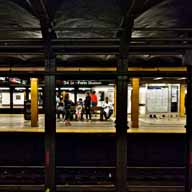
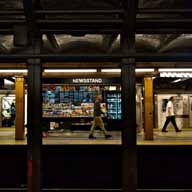
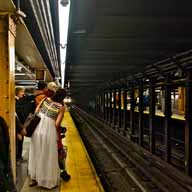
Continuing on the 1/2/3 line for now, 34th Street advertises itself as connecting to Penn Station, but I’ve always found the A/C/E train over on 8th Avenue to be the more convenient station. Despite the signage here, you’ll be trekking underground for some ways to get into the station itself. Of course, convenience is a matter of degree, and if your coming from somewhere that is along this train line, this station does provide that connection.
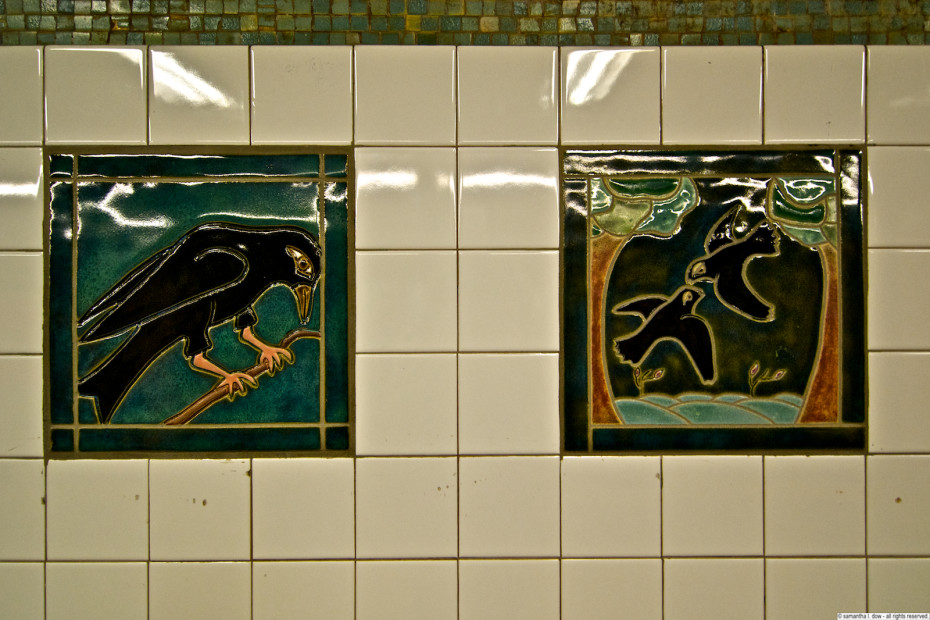
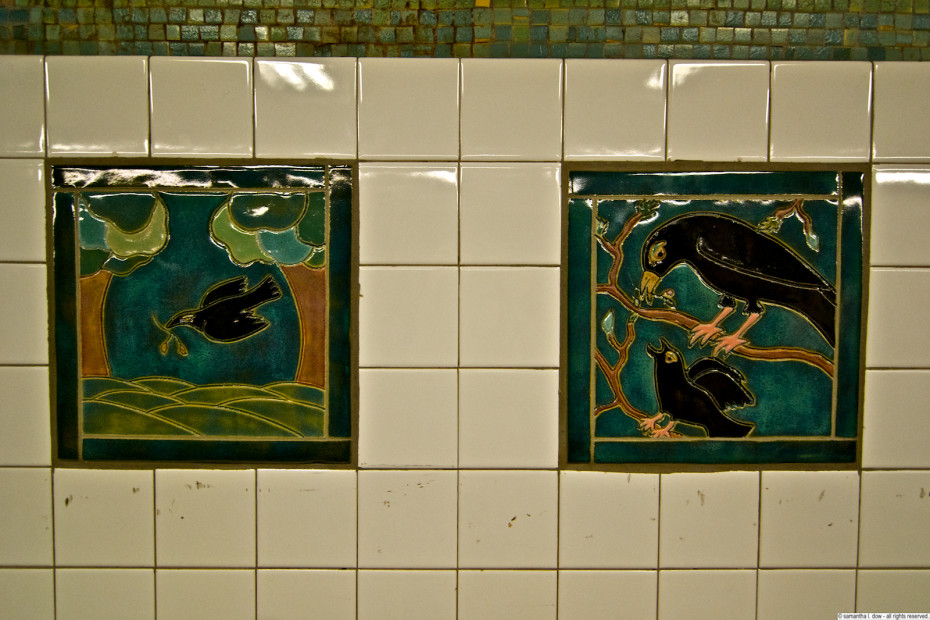
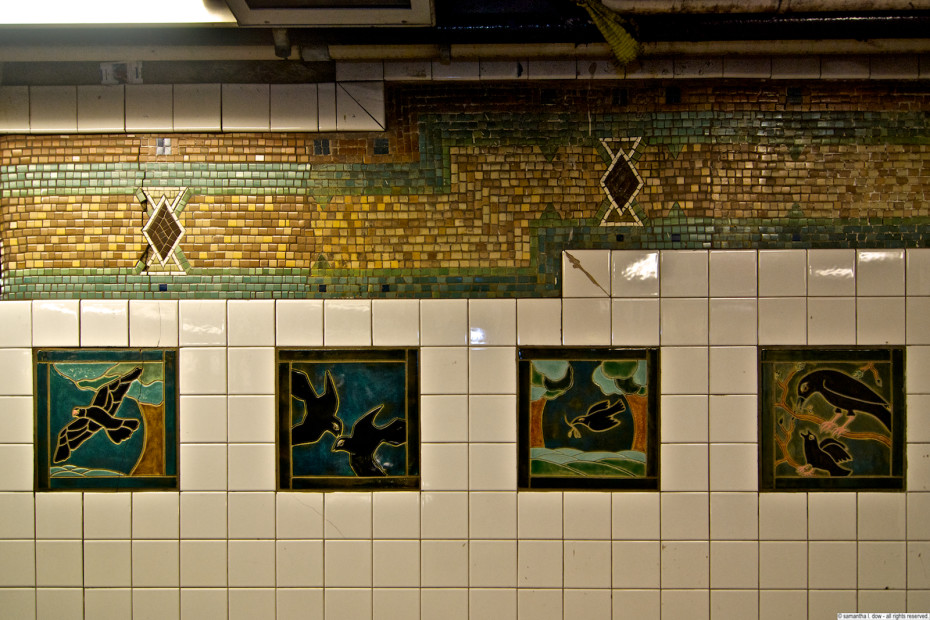
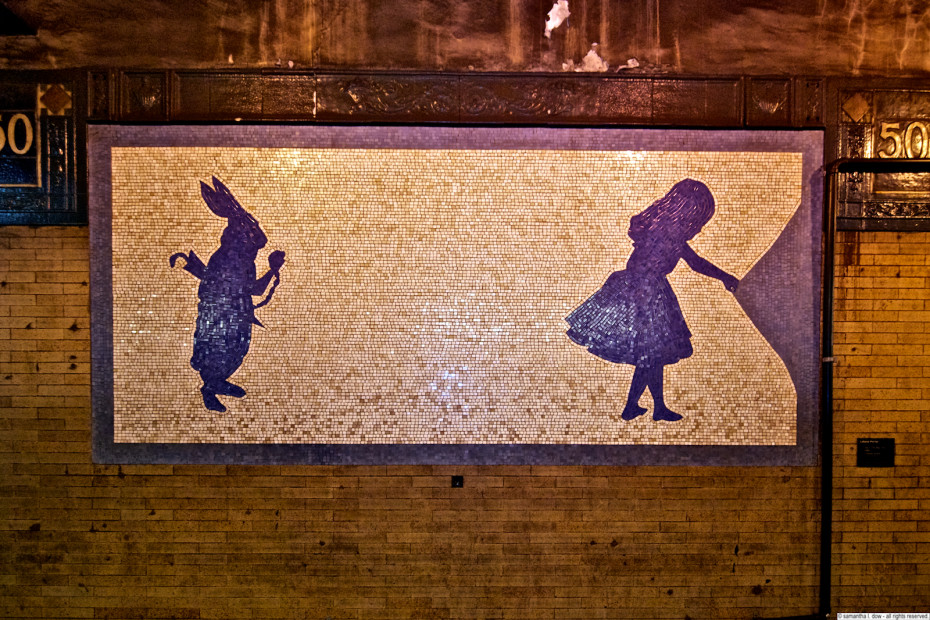
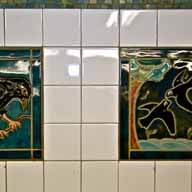
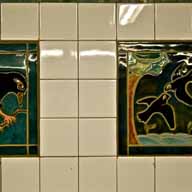
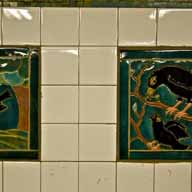
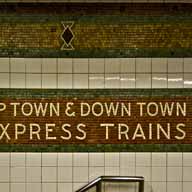
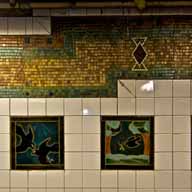
There’s a lot of nice tiled sign work in this station, mostly emphasizing the Penn station connection, as well as some raven-related pure artwork. The art itself is part of a collection called “A Bird’s Life” by Elizabeth Grajales, and the description I could find only indicates that it depicts birds nurturing their young. Yet again, I feel like there is something distinctly lacking in the explanation for why these particular panels were chosen for this particular station.
Station opened: June 3, 1917
Original system: IRT
Trains: 1/2/3
Source: Wikipedia

05/31/2015
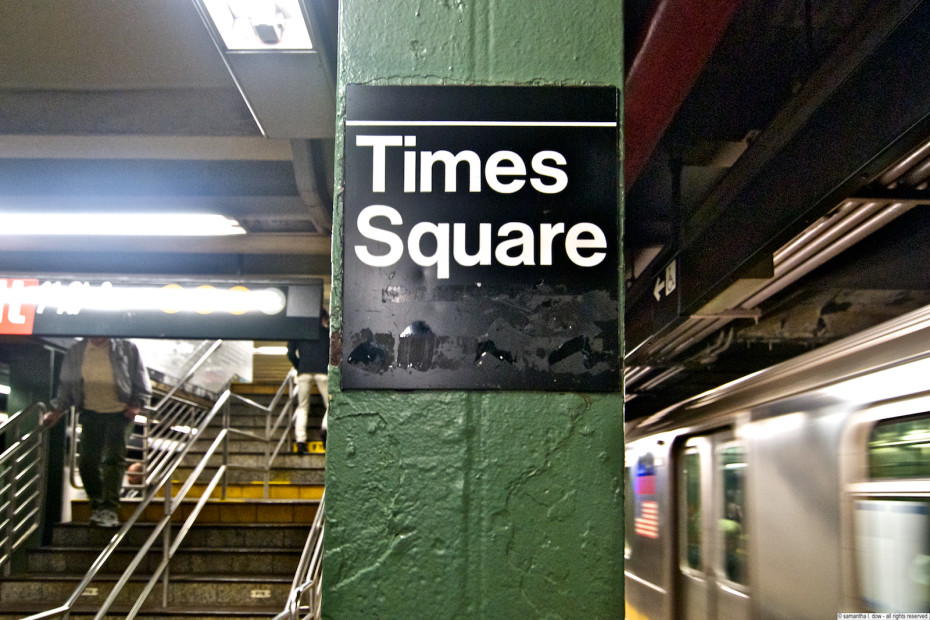
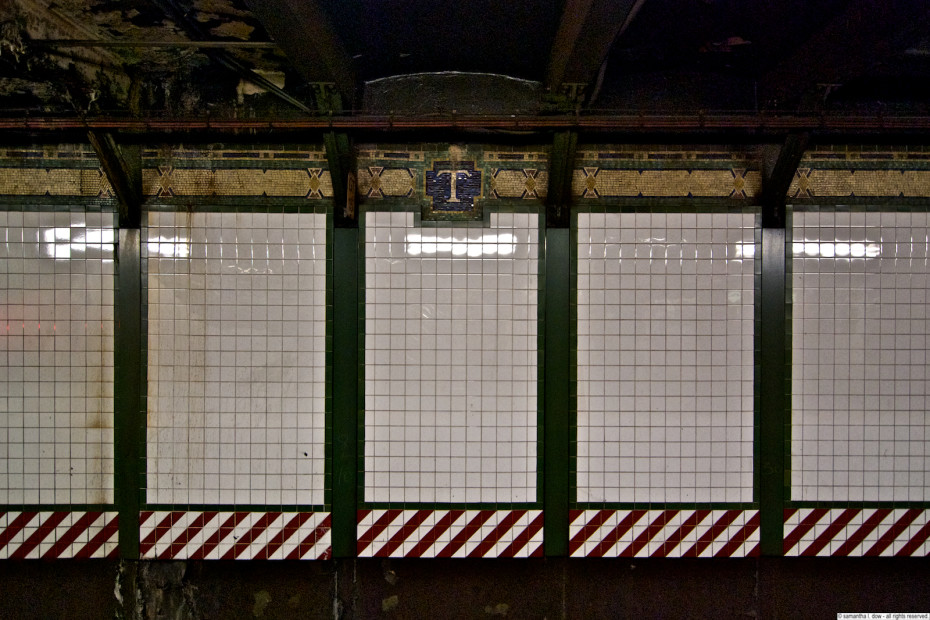
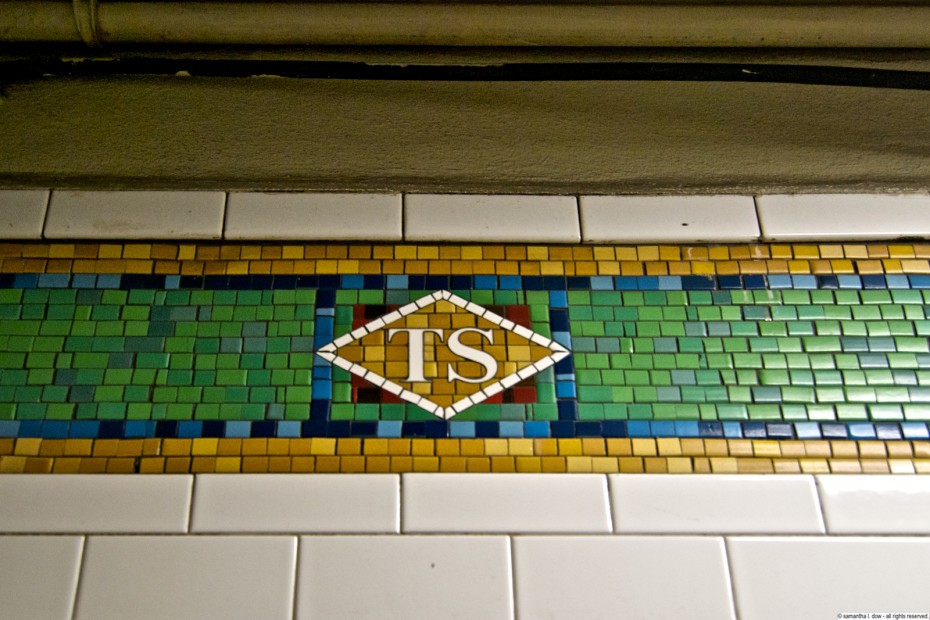
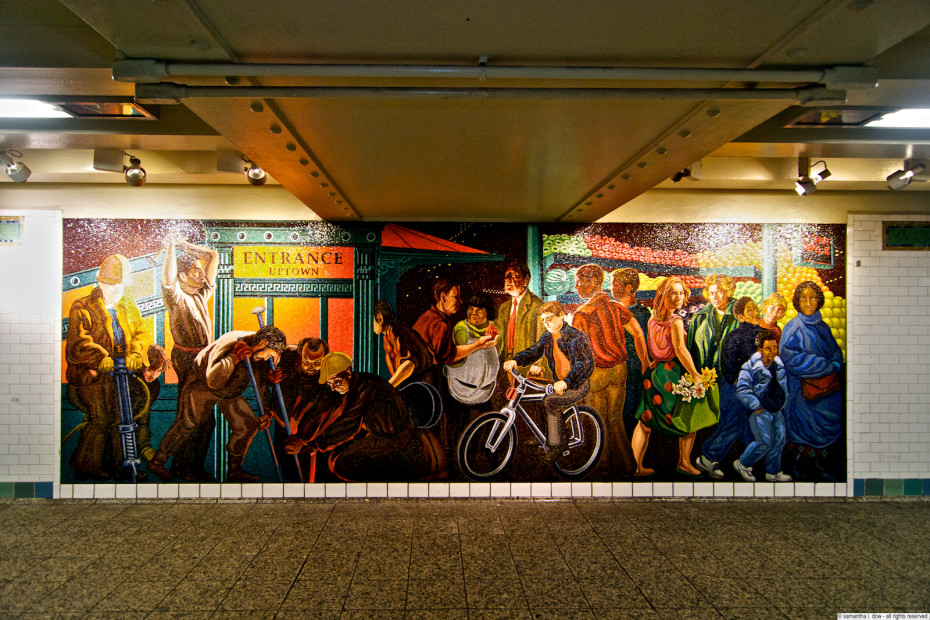
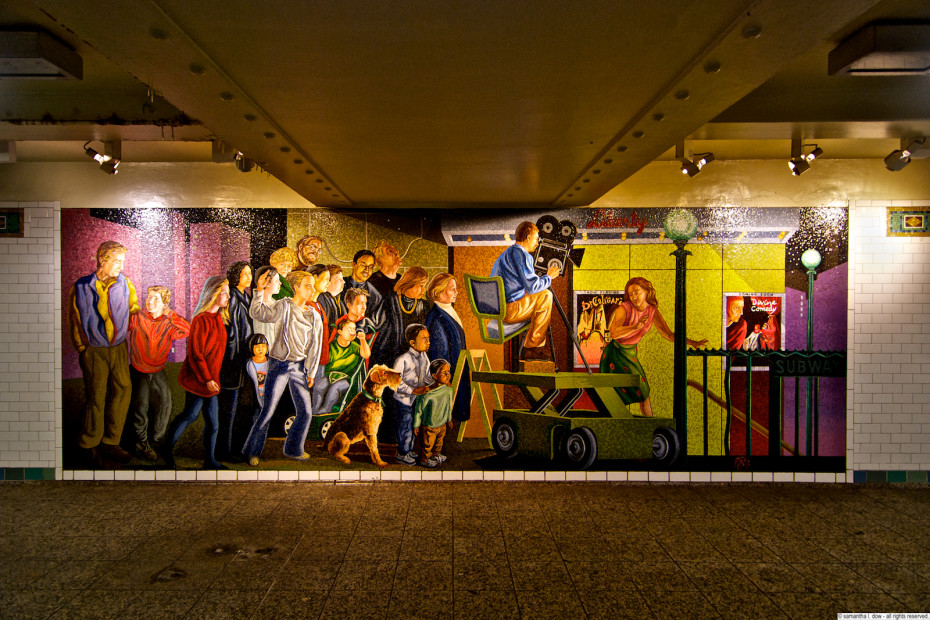
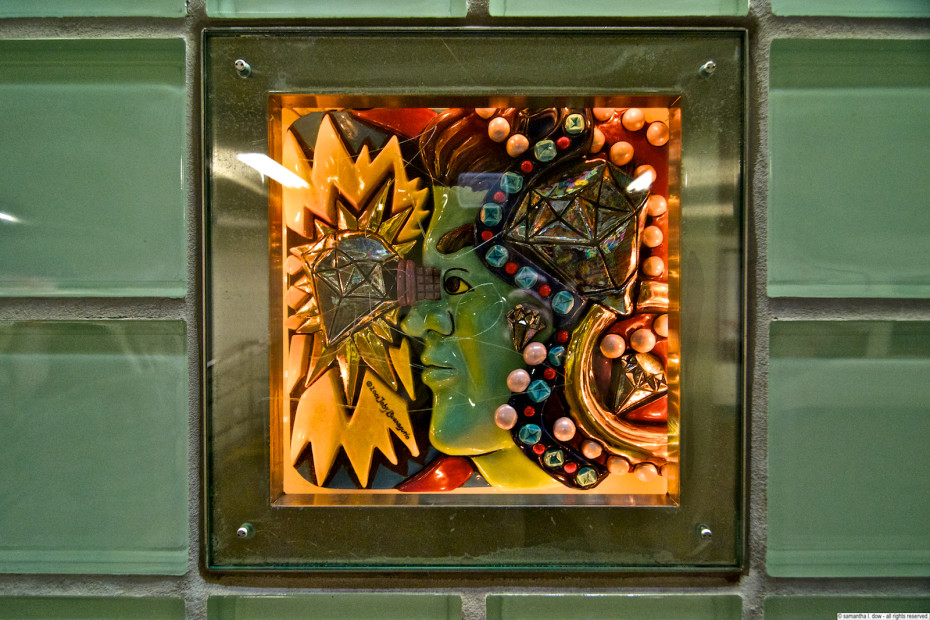
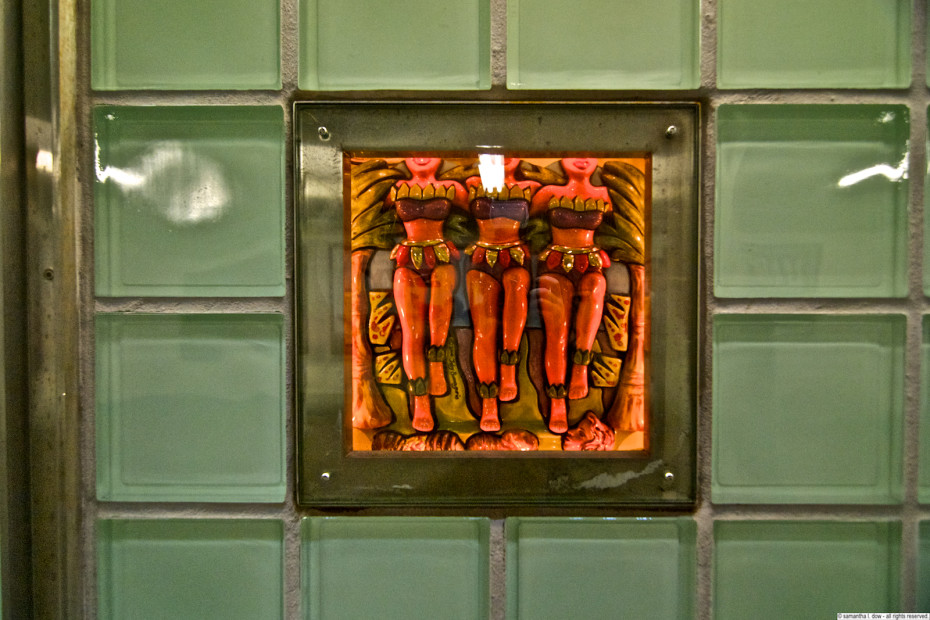
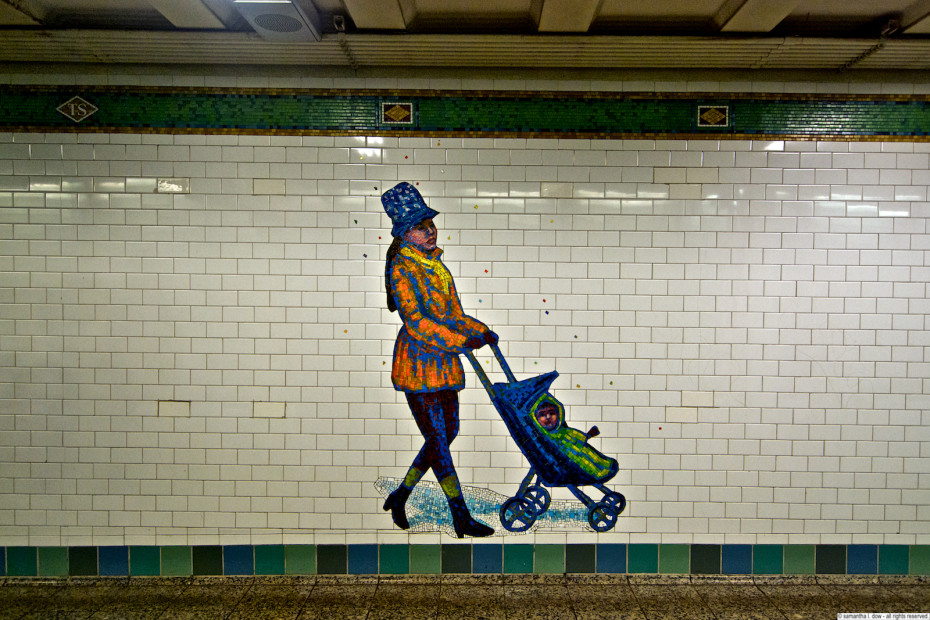
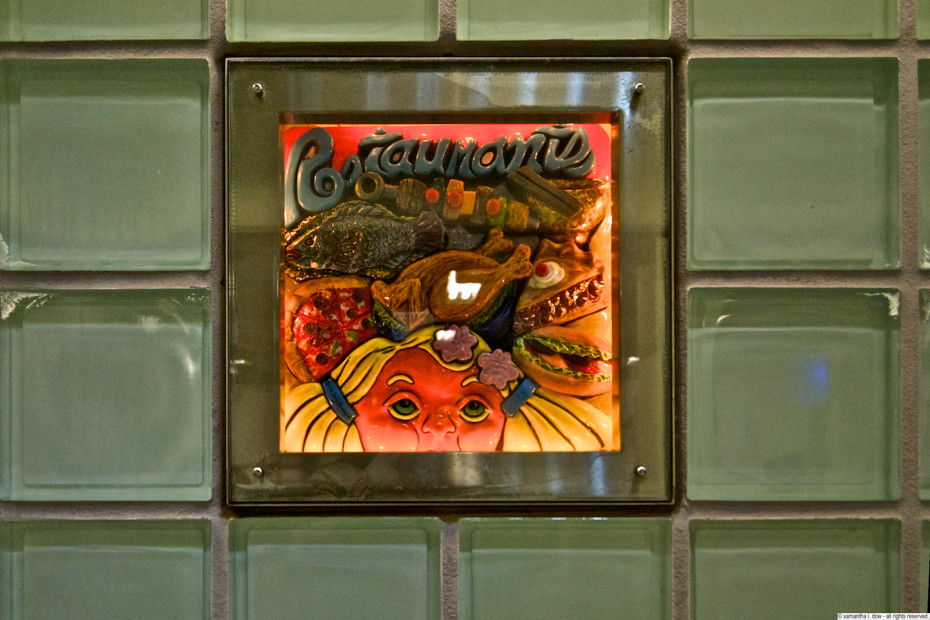
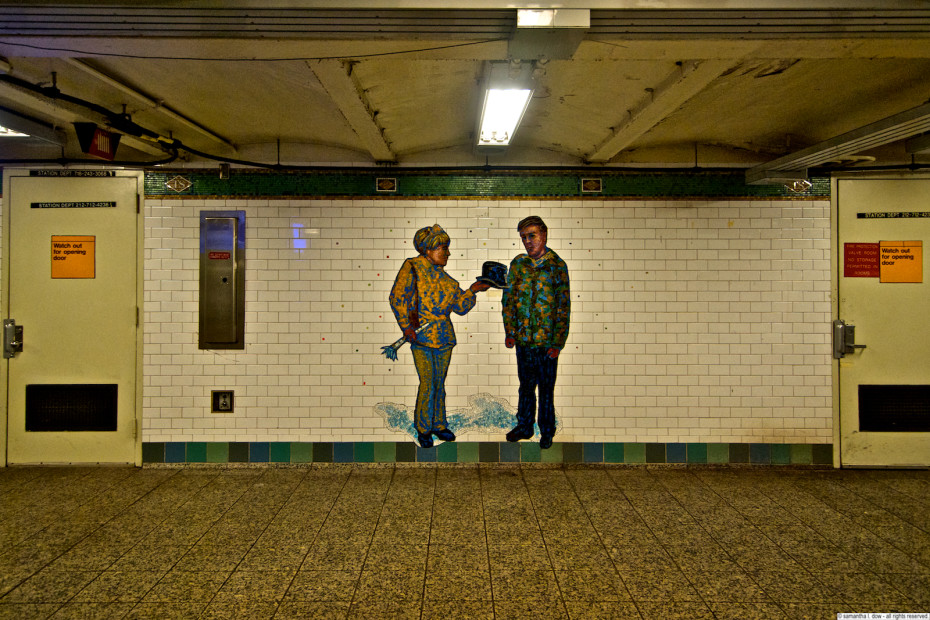
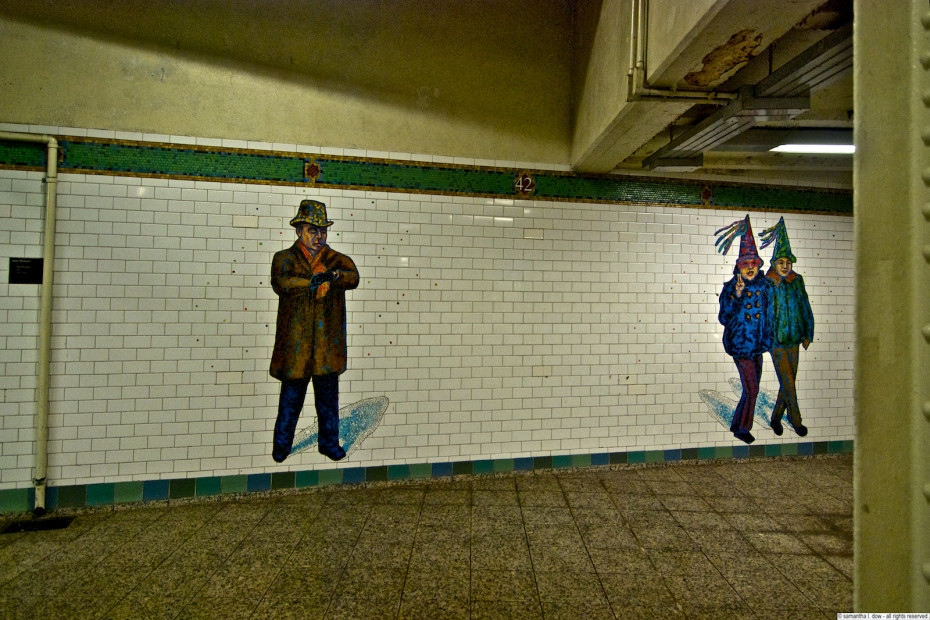
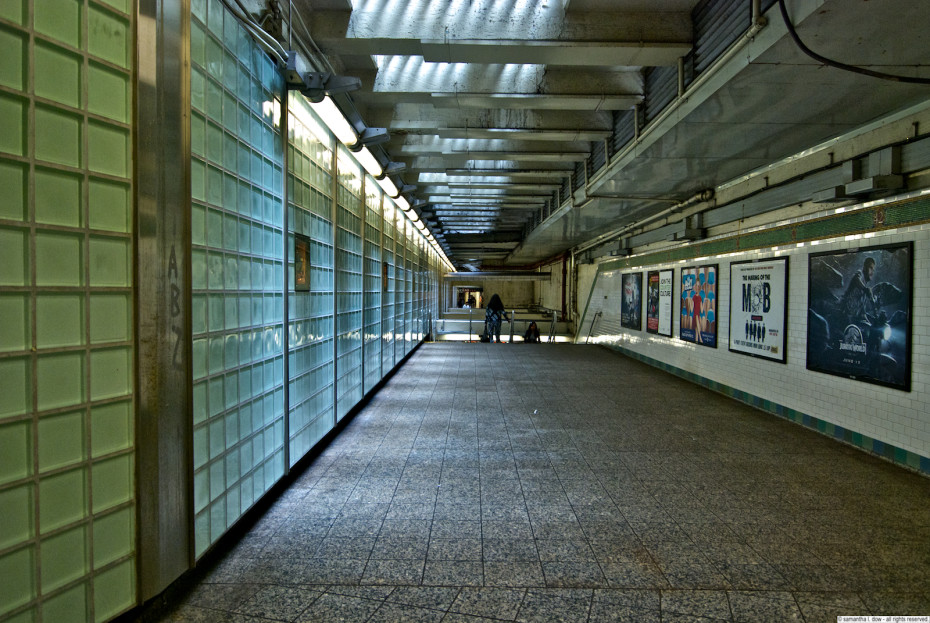
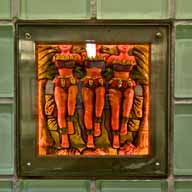
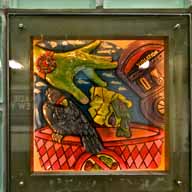
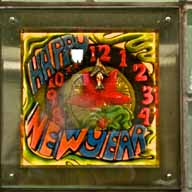
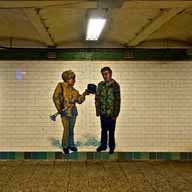
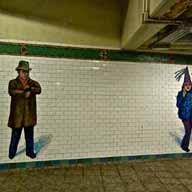
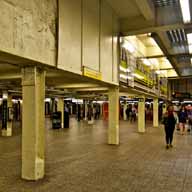
Times Square is a major transfer station. Rather than trying to capture everything at once, I thought I would capture the particular areas on several trips through, which would inevitably happen as I was traveling along various lines anyway. So this set of pics is largely the area around the 1/2/3 platform, although there are a few shots that veer toward the shuttle and the n/r lines, given their proximity. Above ground, Times Square is sometimes referred to as the “Crossroads of the World”, and the subway station beneath is no different. In addition to the lines that are part of this station “proper”, the MTA has built connecting tunnels to additional trains that are actually under the Port Authority, so that you can transfer for free (buy hiking through some very long tunnels) between what were actually different, competing subway systems before the integration of the IRT (Interboro Rapid Transit), BMT (Brooklyn-Manhattan Transit) and IND (the city-owned Independent) by the MTA. For a good explanation of the history of the IRT, BMT and IND, see nycsubway.org. (That site also catalogs a significant amount of subway art, including the artists where known, but I will not be deterred from my own project!).
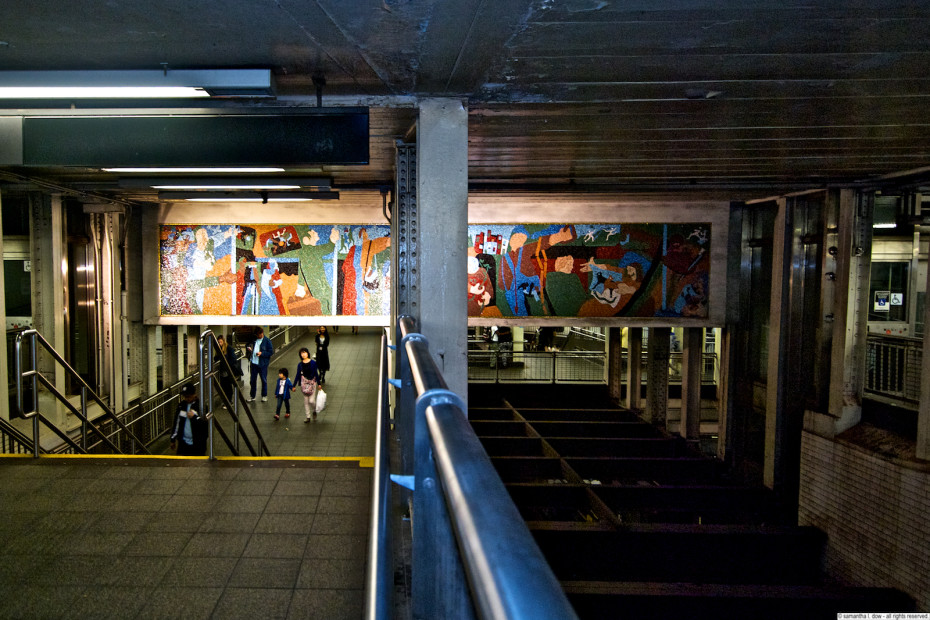
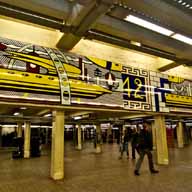
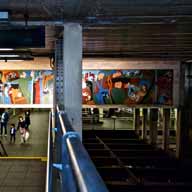
The artwork here brings in several themes that are fairly obvious – there is the theater district, new years eve revelers, and the general tourist-centrism of the area. I particularly like the little light boxes which each have a different aspect of times square (theater, burlesque, restaurants, etc.) in tiny caricature. Probably the most well-known artist to contribute here is Roy Lichtenstein, who created the pop art work near the shuttle platform. One of the many things that 99% of the people streaming through the station don’t stop to notice on their way through the station on a daily basis (including me!).
Station opened: June 3, 1917
Original system: IRT
Trains: 1/2/3
Source: Wikipedia








05/25/2015
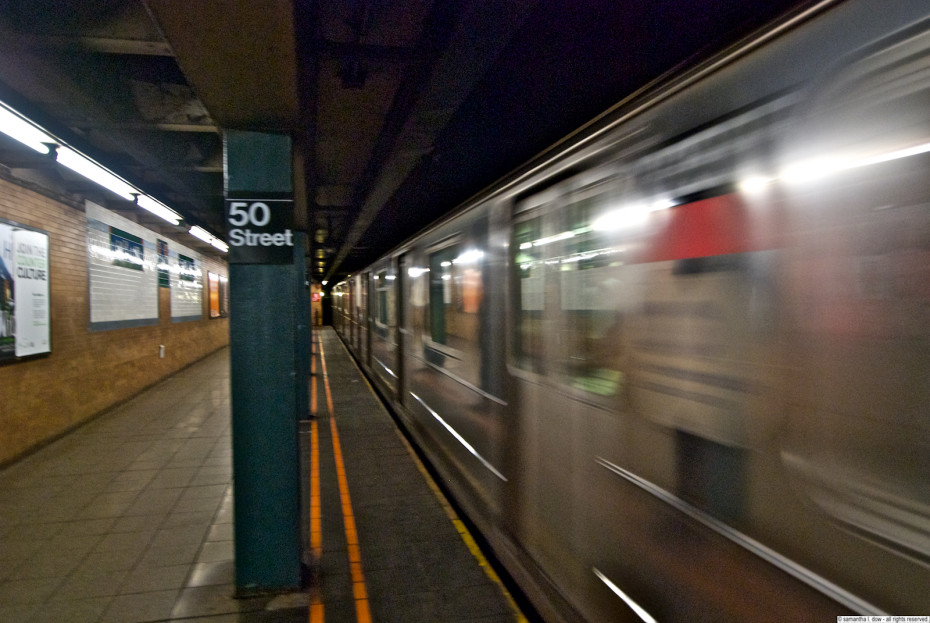
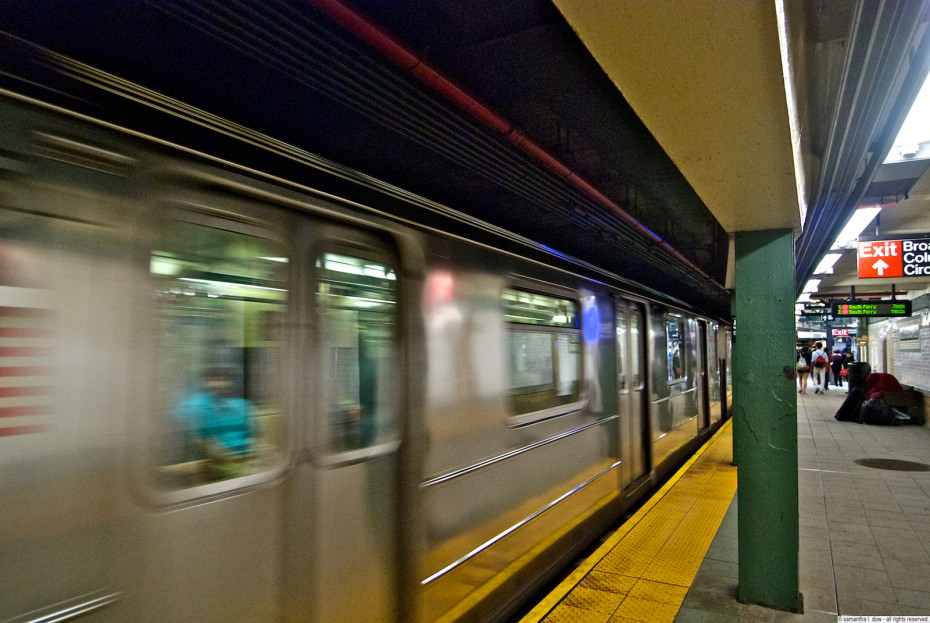
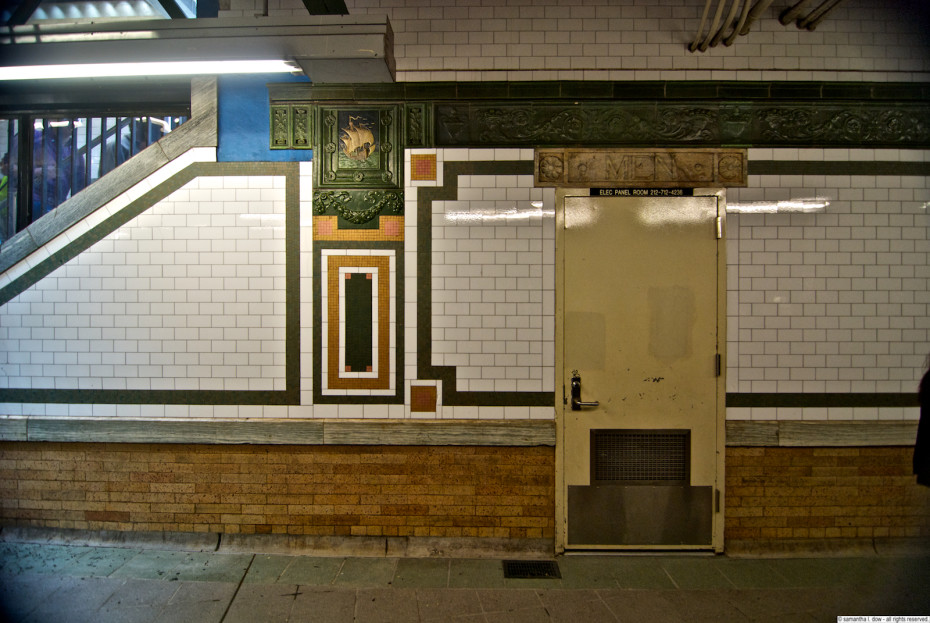
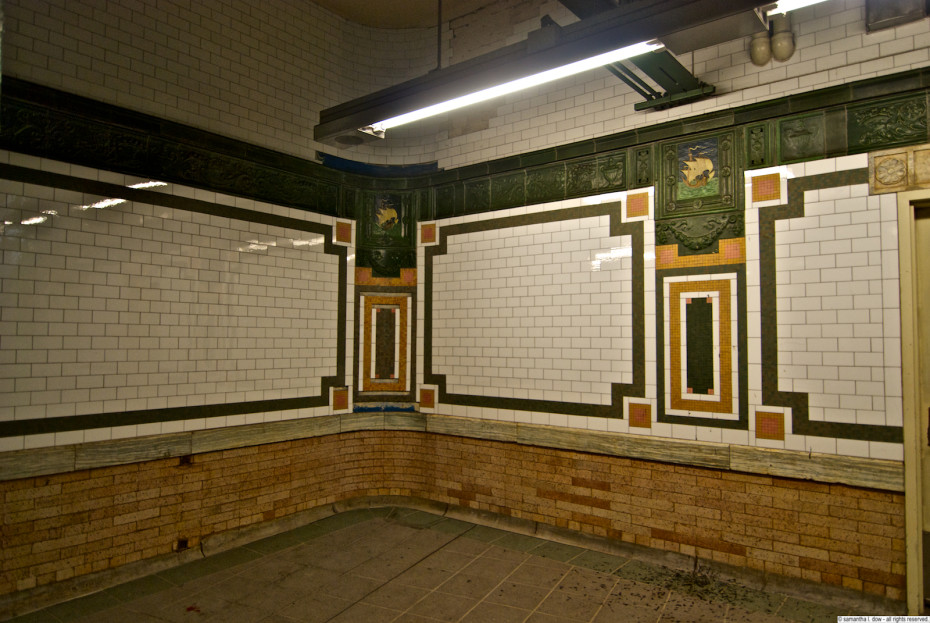
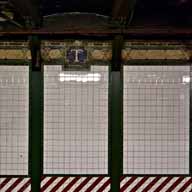
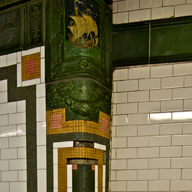
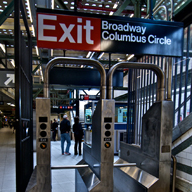
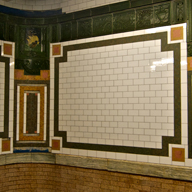
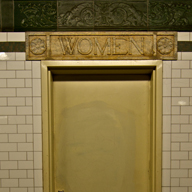
Columbus Circle is a major transfer point between a variety of different lines, but for this trip I stayed mostly near the 1 train platform, so I will probably visit again to capture the AC/BD platform, which is in another area of the station. Given that this is in Columbus Circle, and essentially sits below the very large statue of Christopher Columbus, there is a bit of related iconography. But it’s really the same ship-tile over and over again, as far as I can tell. Some other interesting features include some of the original carved signs for the mens’ and womens’ restrooms, but which don’t appear to lead to restrooms anymore (the mens’ room seems to indicate that it’s actually some sort of electrical room now).
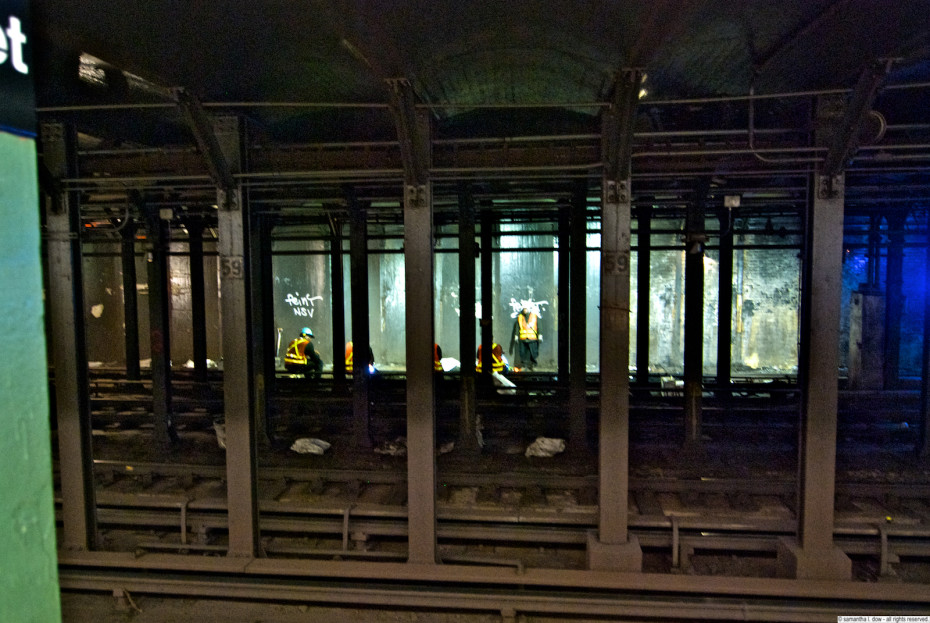
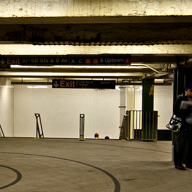
In addition, the northbound local track was shut this weekend due to construction/repair work. You can see some MTA workers over on the northbound track. Lest it seem that they’re not doing much, from what I could tell, the standing guy appeared to be giving instructions to the others – something that doesn’t really translate well to a still photograph!
Station opened: October 27, 1904
Original system: IRT
Trains: 1
Source: Wikipedia







05/24/2015
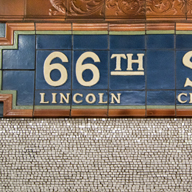
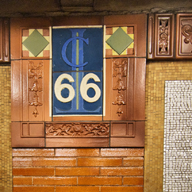
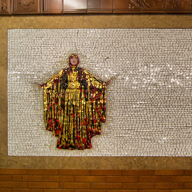
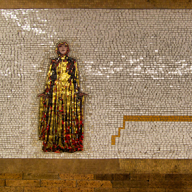
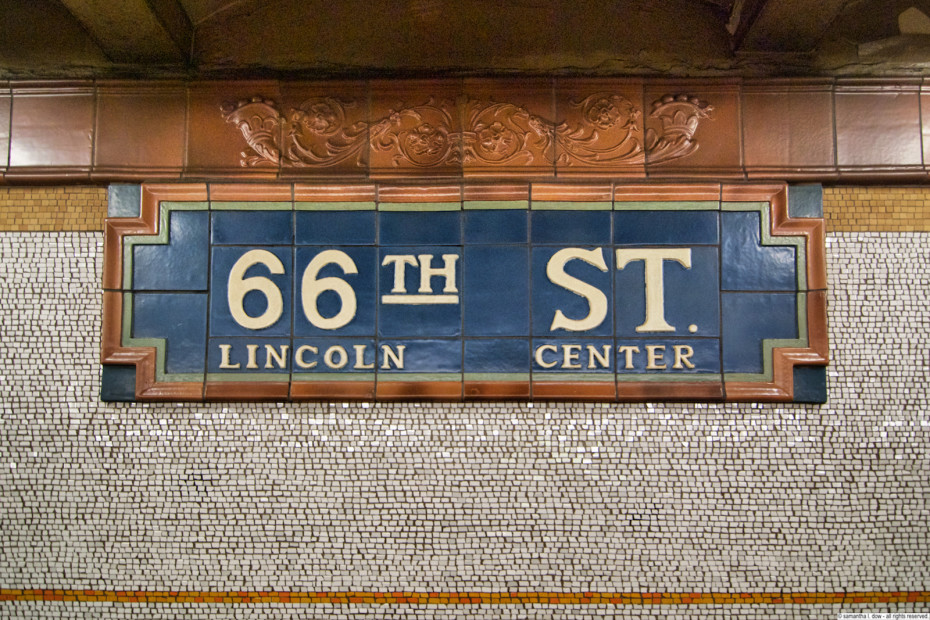
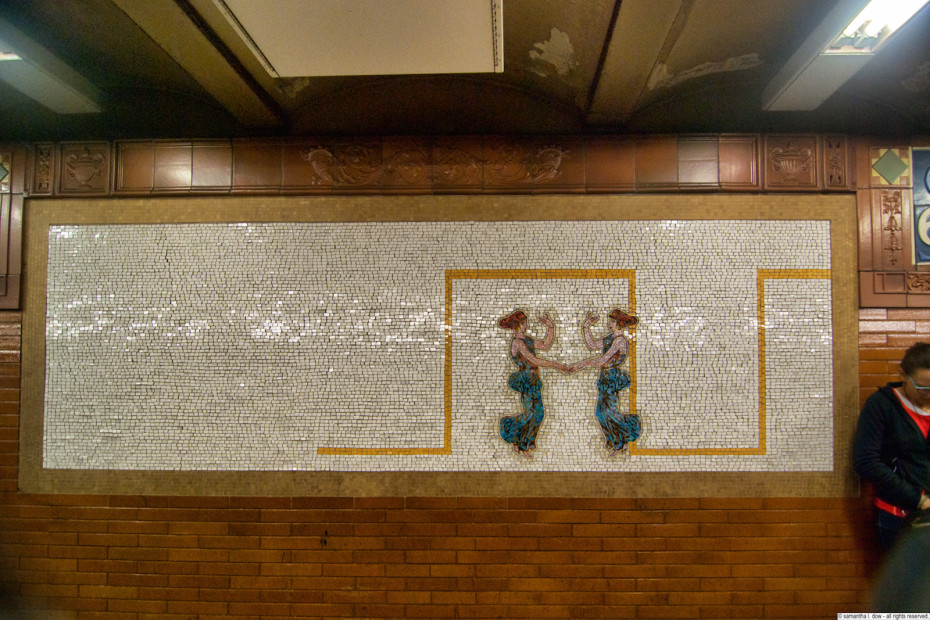
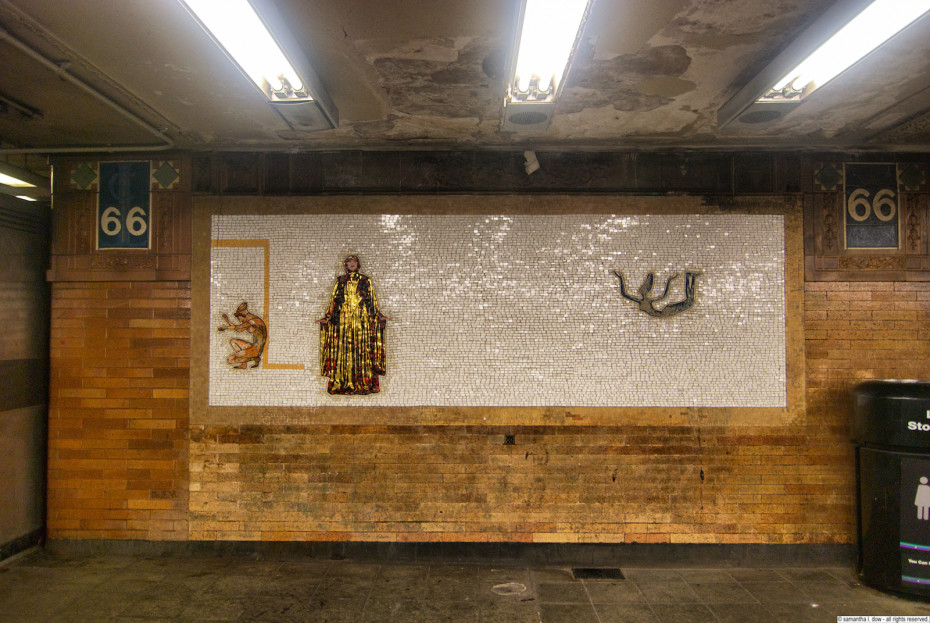
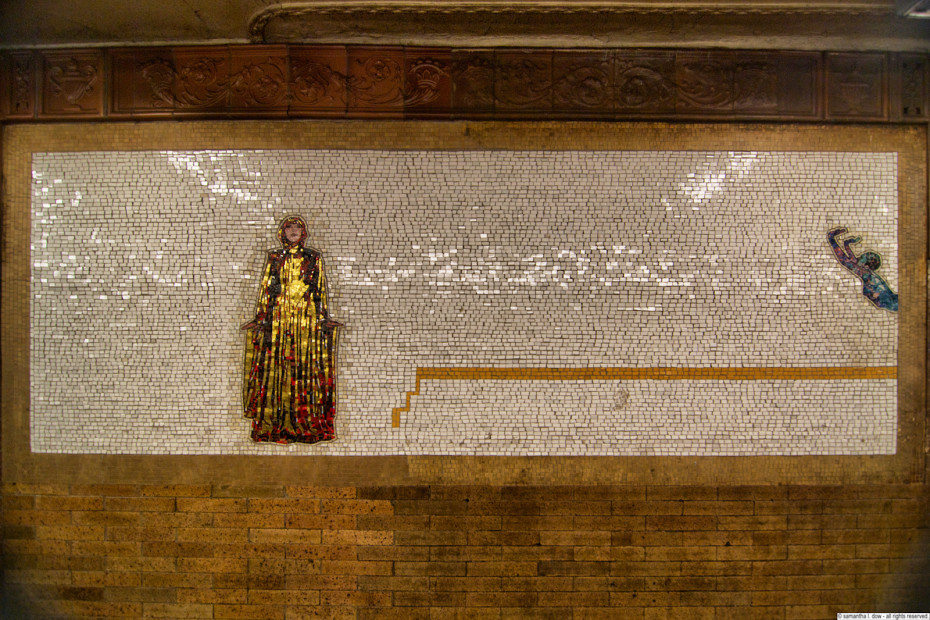
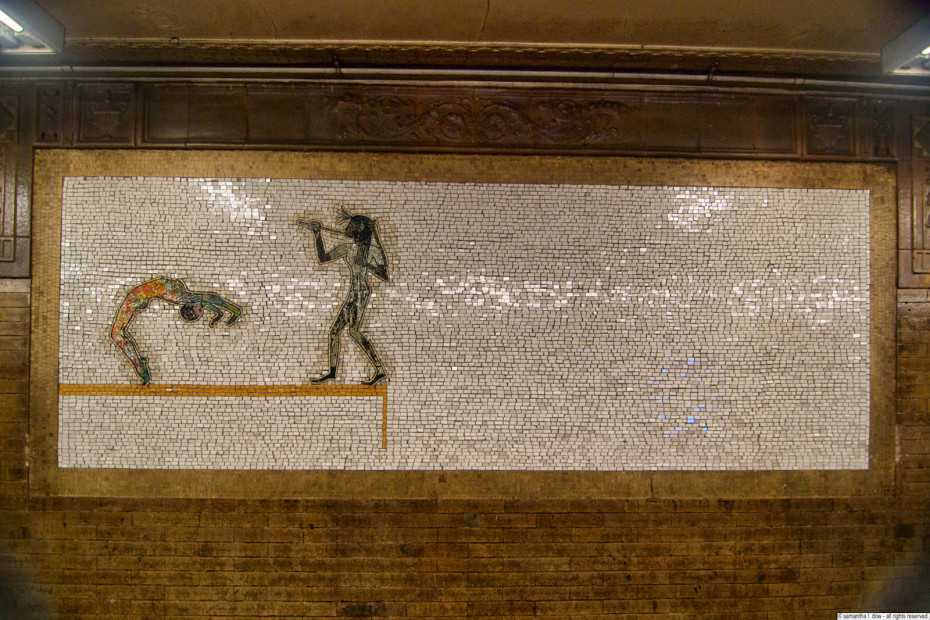
The West 66th Street subway station is a bit of an odd duck. It’s somewhat unnecessary, being so close to both Columbus Circle and West 72nd Street, but it is clearly seen as a priority because of its proximity to Lincoln Center. Forgotten NY has a good rundown of the renovations in this station as part of it’s “Original 28” series – a look at the original 28 stations on the IRT line, of which this (and the 72nd Street Station posted yesterday are both a part.
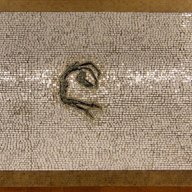
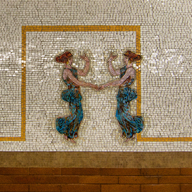
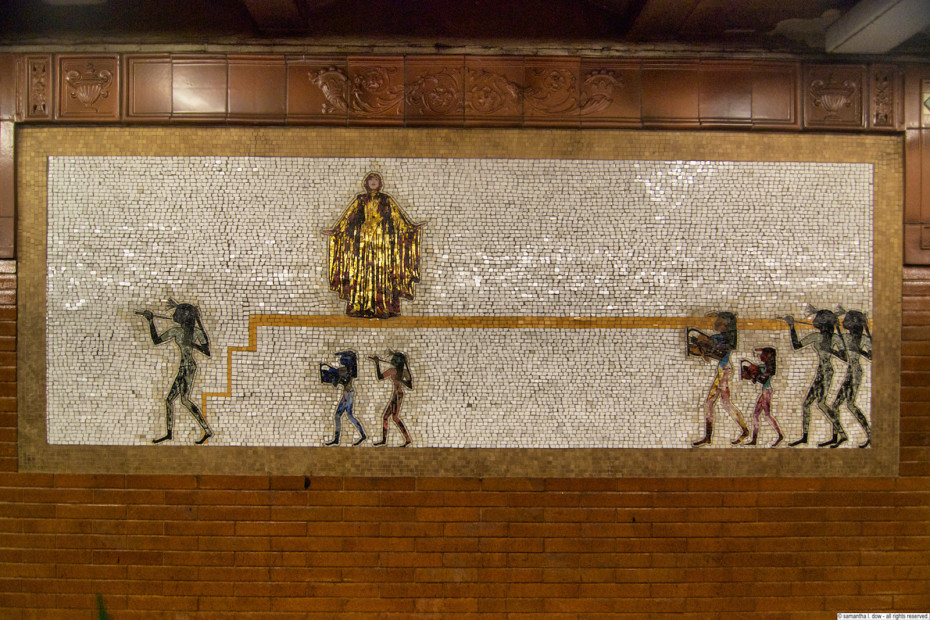
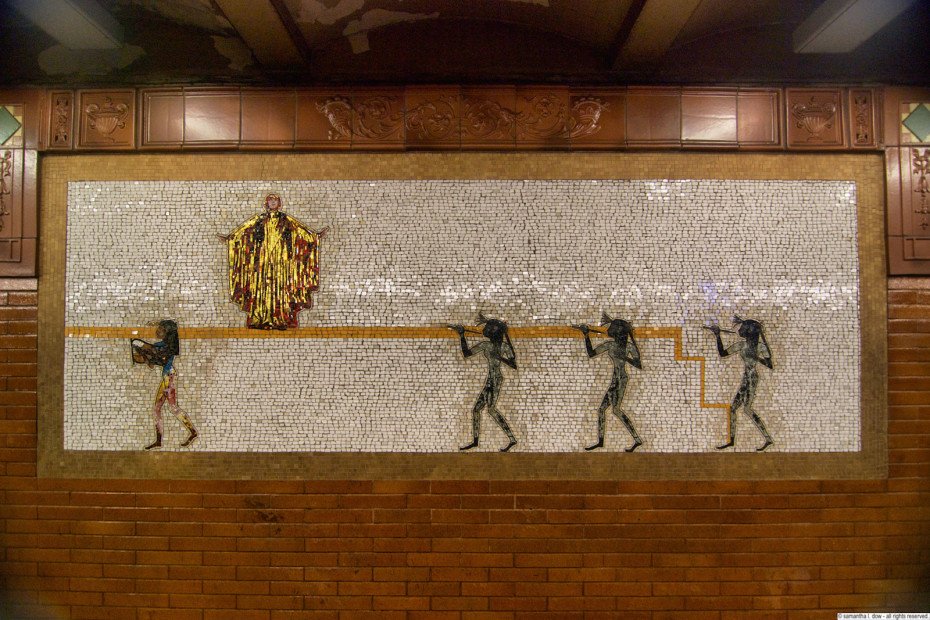
According to FNY, almost nothing in this station is original, but this is perhaps the best restored station of the original 28. I would hazard a guess that this is also due to the Lincoln Center crowd. The mosaics here show dancers, opera singers, and other theater related scenes. All photos here are from the southbound platform. There’s another, entirely different set of mosaics on the northbound platform (trains were not stopping on the northbound platform this weekend due to construction).
Station opened: October 27, 1904 (renovated, including mosaics, in 2004)
Original system: IRT
Trains: 1
Source: Wikipedia